
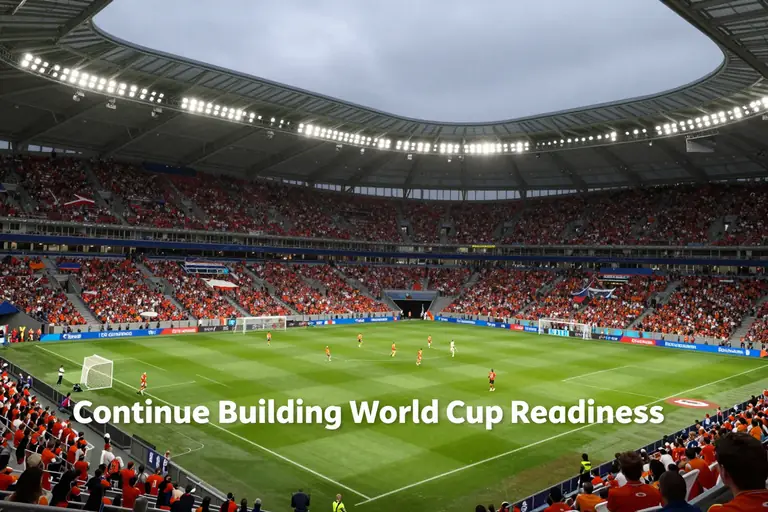
The Oranje’s Path to Global Glory: Netherlands Continue Building World Cup Readiness
As the anticipation for the next global football spectacle steadily builds, all eyes are turning to the teams poised to make a significant impact. Among them, the Netherlands, with their rich footballing heritage and distinctive style of play, are a perennial favorite. The journey to World Cup success is a marathon, not a sprint, and for the Oranje, the focus is squarely on meticulous preparation. This isn’t just about training sessions; it’s about tactical evolution, player cohesion, mental fortitude, and a deep understanding of the modern game’s demands. Indeed, the Netherlands continue building World Cup readiness with a clear vision in mind, aiming to finally lift that coveted trophy.
The Dutch national team has always been known for its innovative approach to the beautiful game. From the “Total Football” of the 70s, which revolutionized tactical play with its fluid positions and relentless pressing, to the attacking prowess seen in recent decades, their philosophy is often emulated but rarely replicated with the same verve and technical proficiency. This time around, under the guidance of their coaching staff, there’s a palpable sense of determination to iron out any weaknesses and amplify their strengths. Every friendly match, every training camp, every squad selection, and even individual player monitoring at their respective clubs, is a deliberate step in their comprehensive plan. The Netherlands continue building World Cup readiness, leaving no stone unturned in their pursuit of the coveted trophy, demonstrating a commitment that extends far beyond the pitch. This relentless pursuit of excellence is why the Netherlands continue building World Cup readiness with such intensity.
Tactical Innovations and Player Development: The Dutch Blueprint
One of the hallmarks of Dutch football, deeply ingrained in its academies and national philosophy, is its unwavering commitment to tactical flexibility and continuous player development. The current squad boasts a compelling blend of seasoned veterans, who bring invaluable experience and leadership, and exciting young talents, who inject youthful exuberance and cutting-edge skill. All of these players are being meticulously molded to fit into a dynamic system that prioritizes adaptability and collective intelligence. The coaching staff is reportedly experimenting with various formations and strategies, from traditional 4-3-3 setups to more fluid 3-4-3 or 3-5-2 systems, ensuring the team can seamlessly adapt to different opponents, match situations, and in-game challenges. This adaptability will be absolutely crucial in the high-stakes environment of the World Cup, where opponents vary wildly in style and quality, and unexpected scenarios are commonplace. The emphasis is not just on individual brilliance – though that is certainly celebrated – but on how each player contributes to the collective, understanding their role within the team’s intricate mechanisms. This holistic approach, fostering both individual growth and team synergy, is fundamental to how the Netherlands continue building World Cup readiness.
For instance, there’s been considerable focus on strengthening their defensive line, often perceived as a vulnerability in past tournaments, while meticulously maintaining their traditional attacking flair. Defenders are being trained not just to win tackles, but to be supremely comfortable on the ball, initiating attacks from the back with precise passing and intelligent movement. They are also expected to participate in high pressing schemes, winning the ball back quickly in advanced areas. Midfielders are expected to be true box-to-box players, contributing both defensively with robust tackling and positional awareness, and offensively with creative passing, driving runs, and opportunistic goal-scoring. They are the engine room, dictating the tempo of the game and controlling possession. Upfront, the forwards are being drilled on intricate link-up play, intelligent off-the-ball movement to create space, and clinical finishing under pressure. These nuanced adjustments, often involving personalized training regimens and extensive video analysis, are all part of the grand strategy. It’s clear that the Netherlands continue building World Cup readiness through continuous refinement of their playing style, ensuring they are a well-oiled, versatile machine. The commitment to these details highlights how seriously the Netherlands continue building World Cup readiness.
Key Players and Emerging Talents: The Engine of Hope
The success of any national team hinges significantly on the performance of its key players. For the Oranje, several individuals are expected to carry the bulk of the responsibility, acting as linchpins around whom the team’s strategy revolves. Their leadership, born from years of experience at the highest club and international levels, their technical skill, and their ability to perform under immense pressure will be vital in navigating the unique challenges of the World Cup. Simultaneously, the emergence of a new generation of young talents provides an exciting and often unpredictable dimension to the squad. These youngsters bring fresh energy, insatiable hunger, and often, a raw, unpredictable brilliance that can turn the tide of a match in an instant. Integrating them seamlessly into the team structure, ensuring they understand their roles and responsibilities while allowing their natural talent to flourish, is a delicate but absolutely essential task for the coaching staff. The balance between the wisdom of experience and the dynamism of youth is a critical component as the Netherlands continue building World Cup readiness, aiming for a blend that offers both stability and explosive potential.
The coaching staff faces the enviable, yet challenging, dilemma of having a deep pool of talent to choose from, a testament to the strength of Dutch football development. This depth allows for healthy competition within the squad, pushing each player to perform at their absolute best in training and in matches, knowing their spot is never guaranteed. It also provides invaluable options for rotation, ensuring players remain fresh, mitigate the risk of injury, and can be strategically deployed throughout the demanding tournament schedule, which often involves playing high-intensity matches within short periods. Managing player fitness, preventing injuries through sophisticated sports science and load management, and ensuring players peak at precisely the right time are all intricate parts of the preparation. This meticulous attention to detail, extending to individual player well-being and performance optimization, underscores how the Netherlands continue building World Cup readiness, recognizing that physical and mental freshness are as crucial as tactical prowess. Their efforts ensure the Netherlands continue building World Cup readiness effectively.
Friendly Matches and Performance Analysis: Learning on the Go
The road to the World Cup is meticulously punctuated by a series of friendly matches and, crucially, qualification games. These fixtures serve as invaluable opportunities to test new tactics, evaluate individual and collective player performances under competitive conditions, and build essential team chemistry. Each match, regardless of the result, provides a learning experience, highlighting areas for improvement, confirming effective strategies, and offering insights into potential opponent weaknesses or strengths. The coaching staff meticulously analyzes every game, utilizing cutting-edge data analytics, advanced video analysis, and sports science metrics to fine-tune their approach. These insights are then translated into targeted training sessions, individual feedback for players, and strategic adjustments.
The recent string of international friendlies and qualification encounters has offered valuable glimpses into the team’s progress and the effectiveness of their evolving strategies. While results are always important for morale and ranking, the primary objective during these preparation matches is often performance and the precise execution of tactical plans. The coaching staff is assessing how players cope under pressure, how they adapt to different opponents’ styles, and how well they communicate and coordinate on the field, especially in moments of transition. These assessments are absolutely crucial for final squad selections, for determining the optimal starting eleven, and for identifying key substitutes who can impact a game. This continuous cycle of play, analysis, adjustment, and re-evaluation is how the Netherlands continue building World Cup readiness, refining their craft with every competitive minute.
For more insights into the broader preparations for the tournament, you can read about how Latest World Cup Preparations Continue Across Host Cities, which provides a wider context to the logistical challenges and advancements being made globally, highlighting the immense effort put in by host nations to create a seamless experience.
Mental Fortitude and Team Cohesion: The Unseen Strength
Beyond the technical and tactical aspects, which are often visible on the pitch, mental fortitude and unwavering team cohesion are paramount for World Cup success. The pressure of playing on the global stage, with billions of eyes watching and the weight of national expectations, can be immense. In such an environment, a strong collective spirit, mutual trust, and shared purpose can make all the difference between victory and defeat. The coaching staff is actively fostering a positive team environment, encouraging open communication, promoting a culture of support, and building strong bonds among the players, extending beyond just their on-field interactions. Team-building exercises, access to psychological support and sports psychologists, and clear communication channels are all integral parts of this comprehensive effort, ensuring players are mentally robust and united.
A truly united squad, where every player trusts and supports their teammates implicitly, where individual egos are subservient to the collective goal, is often an unstoppable force. The ability to overcome setbacks, to remain resilient in challenging moments, to fight back from a losing position, and to maintain unwavering focus throughout a grueling, high-stakes tournament is a direct testament to a team’s mental strength. These intangible qualities, often cultivated off the pitch through shared experiences and a strong team culture, are as important as any tactical plan or individual talent. The emphasis on psychological preparation, treating the mind as much as the body, is a key element as the Netherlands continue building World Cup readiness, recognizing that the battle is often won before the first whistle. This holistic approach ensures the Netherlands continue building World Cup readiness from all angles.
The Role of the Coaching Staff: Architects of Ambition
The leadership of the coaching staff is undeniably central to the entire preparation process; they are the architects of the team’s ambition. Their vision for how the team should play, their vast experience in international football, and their ability to motivate, inspire, and guide the players are absolutely critical. They are responsible for devising the overarching strategy that will navigate the complexities of the tournament, overseeing all training sessions with meticulous detail, making difficult and often unpopular selection decisions, and crucially, managing the squad’s morale and individual player well-being. Their tactical acumen, their ability to read the game, make in-game adjustments, and exploit opponent weaknesses will be tested repeatedly during the World Cup. The trust placed in them by the players, built through consistent communication and a clear direction, is a powerful asset that binds the team together.
The coaching team works tirelessly behind the scenes, often unnoticed, analyzing opponents with incredible depth, scouting potential talents, and ensuring every logistical detail, from travel arrangements to dietary plans, is meticulously taken care of. Their dedication, foresight, and meticulous planning are what enable the players to focus solely on their performance, knowing that all external factors are being managed expertly. This comprehensive support structure, extending from the head coach to the assistant coaches, fitness trainers, medical staff, and analysts, is a vital part of how the Netherlands continue building World Cup readiness. The collective effort from top to bottom, a synergy of roles and responsibilities, is what will ultimately determine their fate on the grandest stage of football. The diligent work of the staff ensures the Netherlands continue building World Cup readiness effectively.
Fan Expectations and National Pride: The Orange Tide
The expectations of Dutch football fans are always incredibly high, and rightly so, given the nation’s rich footballing history and its enduring influence on the global game. The Oranje have a proud, albeit sometimes heartbreaking, history in the World Cup, reaching the final on multiple occasions (1974, 1978, 2010), though never quite clinching the ultimate prize. This history fuels both the immense pressure and the fervent passion surrounding the team. The players are acutely aware of what wearing the iconic orange national jersey means to millions of supporters, both domestically and across the globe. This deep-seated national pride serves as a powerful motivator, driving them to perform at their absolute peak, to leave everything on the pitch for their country.
The unwavering support from the fans, whether filling stadiums with a sea of orange or cheering passionately from homes and pubs, is an incredible asset. Their belief, their noise, and their collective energy can provide an extra surge of adrenaline and inspiration during crucial moments in a match. The team aims not just to win, but to play exciting, attacking football that embodies the spirit of Dutch football – total football, creativity, and relentless effort. Meeting these high expectations while simultaneously managing the immense pressure is a delicate balancing act, but one that the team and its staff are embracing as a challenge. The profound desire to make their nation proud, to write a new, victorious chapter in their footballing history, is a significant and powerful factor as the Netherlands continue building World Cup readiness, hoping to finally bring the trophy home.
Looking Ahead: The Final Stretch and the Dream
As the World Cup draws nearer, the intensity of preparation will only increase exponentially. The final squad selection, a moment of immense anticipation and difficult decisions, the last few friendly matches to fine-tune strategies, and the eventual journey to the host nation will all be critical milestones in this arduous yet exhilarating journey. Every player will be vying fiercely for a coveted spot in the starting eleven, and the competition will be intense, ensuring that only the very best are selected. The coaching staff will be making their final adjustments, refining their strategies down to the smallest detail, and ensuring every player is physically, tactically, and mentally ready for the monumental challenge ahead.
The ultimate goal, the culmination of years of planning and effort, is to arrive at the tournament in peak condition, with a cohesive team that is supremely confident in its abilities and absolutely united in its purpose. The journey has been long and arduous, filled with triumphs and setbacks, but the destination – World Cup glory – makes every single effort worthwhile. The Netherlands continue building World Cup readiness with an eye firmly on that ultimate prize, hoping to etch their name in football history as champions. Their meticulous planning, the continuous tactical evolution, the dedicated nurturing of talent, and the unwavering fostering of a winning mentality all converge to define the current, critical phase of their preparation. It’s a testament to their enduring commitment to excellence, a deep-seated belief in their footballing philosophy, and an unyielding desire to succeed. Indeed, the Netherlands continue building World Cup readiness, meticulously crafting a pathway to potential triumph on the grandest stage of football, dreaming of the day they can finally hoist that golden trophy high. The determination to succeed fuels their efforts as the Netherlands continue building World Cup readiness.
FAQ
Q: What are the main areas of focus for the Netherlands in their World Cup preparations?
A: The Netherlands are primarily focusing on several key areas: tactical innovations, which include experimenting with various formations and adaptive strategies; seamlessly integrating emerging talents with seasoned veteran players to create a balanced squad; rigorous performance analysis derived from friendly matches and qualification games; and building strong mental fortitude and deep team cohesion through psychological support and team-building initiatives. Their aim is to forge a dynamic, adaptable, and mentally resilient squad capable of performing under immense pressure. This comprehensive approach is central to how the Netherlands continue building World Cup readiness.
Q: How important are friendly matches to the Dutch team’s readiness?
A: Friendly matches are extremely important and serve as invaluable opportunities. They allow the coaching staff to test new tactical approaches and formations in a competitive setting, evaluate individual player performances under match conditions, and, crucially, build chemistry and understanding among the squad members. These games help the coaching staff to identify both strengths to capitalize on and weaknesses that need to be addressed and refined before the intensity of the main tournament begins. They are a critical component as the Netherlands continue building World Cup readiness.
Q: What role does the coaching staff play in the Netherlands’ World Cup preparations?
A: The coaching staff plays a pivotal and comprehensive role. They are responsible for devising the overall strategic vision for the team, meticulously overseeing all training sessions, managing player selections and maintaining squad morale, and providing critical tactical analysis of opponents and the team’s own performance. Their leadership, experience, and meticulous planning are absolutely essential for the team’s success, guiding every aspect of the preparation from strategy to logistics and player well-being. Their efforts are key to how the Netherlands continue building World Cup readiness.
Q: How does the Netherlands balance experienced players with emerging talents?
A: The Netherlands actively seeks to create a balanced squad by integrating seasoned veterans with promising young talents. The experienced players provide leadership, stability, and crucial tournament know-how, while the emerging talents bring fresh energy, raw skill, and a desire to prove themselves. The coaching staff focuses on seamlessly integrating these two groups, fostering a culture where knowledge is shared, and both experience and youthful exuberance contribute to the team’s overall dynamic and success. This balance is vital as the Netherlands continue building World Cup readiness.
Q: What is the significance of fan expectations and national pride for the team?
A: Fan expectations and national pride are incredibly significant for the Dutch team. The Netherlands has a rich World Cup history, reaching multiple finals, which creates high expectations among supporters. This national pride acts as a powerful motivator for the players, driving them to perform at their highest level. The unwavering support from fans, both at home and abroad, provides an emotional boost and an extra layer of motivation, with the team aiming to play exciting football and ultimately make their nation proud by achieving World Cup glory. This strong connection drives the Netherlands continue building World Cup readiness.