
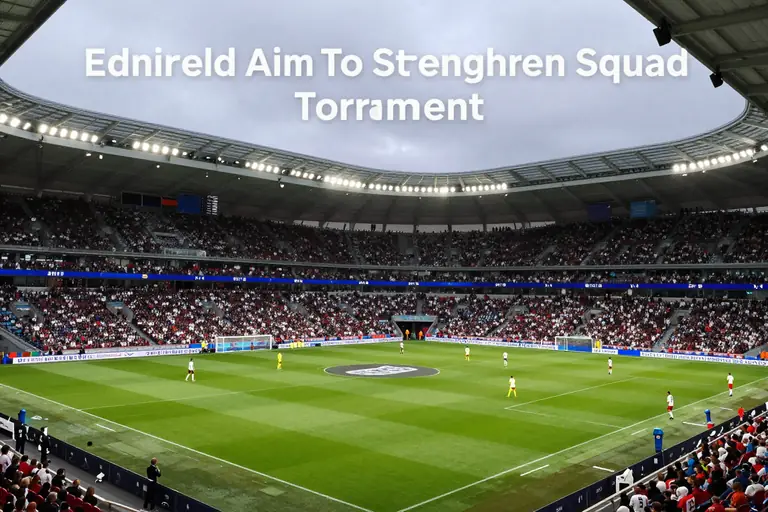
The Road Ahead: Why England Aim To Strengthen Squad Before Tournament
As the anticipation for the next major international football tournament builds, all eyes are on the contenders vying for glory. Among them, England stands out, not just for their rich footballing history and passionate fanbase, but for their deliberate and proactive approach to preparation. It’s unequivocally clear that England aim to strengthen squad before tournament, understanding that sustained success at the pinnacle of international football demands continuous refinement, strategic additions, and an unwavering commitment to improvement. This isn’t merely about plugging perceived gaps; it’s a holistic endeavor to elevate the overall quality, tactical versatility, and psychological resilience of the team, ensuring they possess the depth and adaptability required to navigate the grueling demands of a high-stakes competition. Indeed, England aim to strengthen squad before tournament, a pivotal decision for championship aspirations.
The modern game is an incredibly dynamic and unforgiving landscape. Teams need versatility across multiple positions, profound tactical flexibility to counter diverse opponents, and a deep bench of talent capable of performing under immense pressure. Injuries, suspensions, and the inevitable fatigue that accumulates over a tournament’s duration are not just possibilities but certainties, making a robust, multi-faceted squad absolutely essential. For England, the fervent desire to strengthen their ranks is a direct recognition of these contemporary realities. They are not content to rest on past achievements or rely solely on existing talent; instead, they are actively scouting emerging talents, developing promising youngsters, and strategically integrating new profiles to forge an even more formidable and cohesive unit. This proactive stance is a hallmark of elite preparation, especially when England aim to strengthen squad before tournament.
Assessing the Current Landscape: Where Does England Stand?
Before any meaningful strengthening can commence, a meticulous and honest assessment of the current squad is paramount. This intricate process involves a multi-layered evaluation of individual player performance within their respective clubs, their current fitness levels, their psychological fortitude, and their fundamental suitability for the national team’s evolving tactical philosophy. Coaches, data analysts, and sports scientists pour over vast amounts of data, meticulously watch countless club and international matches, and engage in constant, open dialogues with players and their club managers. The overarching goal is not just to identify areas where the team already excels – which are numerous – but, more critically, to pinpoint specific positions or attributes where there might be significant room for strategic improvement or where a different profile could offer a crucial advantage. This is core to how England aim to strengthen squad before tournament.
Perhaps there’s an identified need for greater defensive solidity in a particular area of the pitch, or a more incisive, creative spark in midfield that could consistently unlock deep-lying, organized defenses. Maybe the existing attacking options, while undoubtedly strong, lack a specific profile – such as a target man, a prolific poacher, or a wide player with exceptional dribbling ability – that would offer a distinct tactical dimension or a crucial ‘plan B’. These are the precise types of strategic questions that rigorously guide the selection process. The management team isn’t simply looking for ‘good players’ in isolation; they are searching for the ‘right players’ – individuals who can seamlessly complement the existing talent, enhance collective strength, and provide varied solutions to complex tournament challenges. Everyone involved, from the coaching staff to the administrative personnel, understands that England aim to strengthen squad before tournament, and this comprehensive, data-driven assessment serves as the foundational first step towards achieving that objective.
Key Areas for Reinforcement: Tactical and Positional Considerations
When we discuss how England aim to strengthen squad before tournament, the conversation often gravitates towards specific positional needs or desired player attributes that can elevate the team’s overall functionality. For instance, a persistent discussion point might revolve around the need for another commanding center-back; a player who not only exhibits exceptional defensive acumen and aerial prowess but also possesses the composure and passing range to initiate attacks from deep, effectively bypassing an opponent’s first press. Alternatively, the focus could be on acquiring a dynamic, box-to-box midfielder who can cover vast amounts of ground, consistently win possession, dictate the tempo of play, and also contribute significantly to goal-scoring opportunities through late runs into the box or incisive passes. The modern full-back role, too, has evolved dramatically, now demanding players who are equally adept at stifling opposition wingers defensively and providing a consistent attacking threat through overlapping runs, accurate crosses, and intelligent link-up play.
Another absolutely crucial aspect of reinforcement is ensuring profound depth in every single position. A strong starting XI is, without question, vital for any successful tournament campaign. However, a truly triumphant run often hinges on the quality of substitutes – players who can enter the fray and either dramatically change the game’s complexion, maintain an already high intensity, or decisively see out a result. This necessitates having multiple, high-quality options for each role, ensuring that if a key player is sidelined due to injury, suspension, or tactical necessity, the team does not suffer a significant or perceptible drop-off in quality. This depth also serves a secondary, yet equally important, purpose: it fosters healthy, constructive competition within the squad, continually pushing every player to perform at their absolute peak, both in training and during matches. It represents a truly holistic and forward-thinking approach to ensuring England aim to strengthen squad before tournament in every conceivable dimension, from the starting eleven to the options on the bench.
Youth Integration and Emerging Talent: The Future is Now
A significant, indeed indispensable, component of any successful long-term footballing strategy involves the meticulous nurturing and seamless integration of youth talent. England, through its extensive and well-funded academy system, boasts an exceptionally rich pipeline of young players consistently emerging and making significant impacts in top-tier leagues both domestically and abroad. Many of these burgeoning stars have already garnered considerable attention and demonstrated their immense potential. Providing these emerging talents with meaningful opportunities at the senior international level is not just a gesture of faith; it is absolutely crucial for their individual development, for the sustained competitiveness of the national team, and for ensuring a continuous supply of world-class players. It represents a delicate yet vital balance between the invaluable experience of seasoned veterans and the fearless exuberance of youthful potential. This is a key part of how England aim to strengthen squad before tournament.
On occasion, a young player can offer a profoundly fresh perspective, an unpredictable element that established opponents are simply not accustomed to or prepared for. Their inherent fearlessness, raw talent, and often unconventional approaches can prove to be genuine game-changers in tight matches. The national team management meticulously monitors these talents, providing clear and structured pathways into the senior squad, often through junior international levels and progressive training camps. This forward-thinking strategy ensures that even as England aim to strengthen squad before tournament, they are simultaneously and strategically building for future competitions, establishing a sustainable model of success that transcends individual tournaments. The thoughtful and deliberate integration of youth is, therefore, a foundational pillar in their overarching strategy to keep the team highly competitive and relevant on the global stage for many years to come, ensuring a continuous cycle of talent renewal.
Learning from Past Tournaments: What Works and What Doesn’t
Every major international tournament, regardless of the outcome, provides an invaluable repository of lessons. Analyzing past performances, encompassing both glorious successes and painful shortcomings, is an absolutely critical exercise that profoundly shapes future strategies and tactical approaches. England’s dedicated coaching staff meticulously reviews previous campaigns, dissecting match footage, analyzing performance metrics, identifying recurring tactical trends, and, perhaps most importantly, pinpointing specific areas where the team might have fallen short or exhibited vulnerabilities. Was it a discernible lack of composure in critical, high-pressure moments? Was there insufficient tactical flexibility to adapt to evolving match situations or different opponent styles? Or perhaps, was there a specific player profile or skill set that was conspicuously missing from the squad?
These rigorous reflections directly and profoundly influence the strategic decisions made when the team actively seeks to strengthen. For instance, if previous tournaments consistently highlighted a vulnerability against teams renowned for their blistering pace on the wings, the strategic focus might decisively shift towards recruiting faster, more athletic defenders or midfielders capable of providing robust defensive cover and quickly transitioning into attack. If, conversely, numerous goal-scoring opportunities were created but consistently not converted into goals, then the imperative becomes bringing in a more clinical, prolific finisher or a highly creative playmaker capable of unlocking defenses with a single pass. This continuous, iterative learning cycle is absolutely fundamental to how England aim to strengthen squad before tournament, ensuring they rigorously avoid repeating past mistakes and are demonstrably better prepared and more resilient for future challenges. In fact, many leading footballing nations are meticulously adopting this precise, analytical approach to preparation, much like the extensive World Cup Infrastructure Projects Near Completion, where meticulous planning, precise execution, and continuous optimization are paramount for achieving desired outcomes and hosting a successful event.
The Role of Club Form and Player Availability
While the national team management operates with a clear, overarching vision and strategic objectives, the practical reality of player selection is heavily and inextricably influenced by a confluence of factors, primarily current club form and player availability. A player might be performing at an exceptionally high level for their respective club, demonstrating world-class ability week in and week out, but a sudden, ill-timed injury could unfortunately rule them out of contention for the national squad. Conversely, a player who has historically been a regular fixture in the national team might experience a temporary dip in form, opening a crucial window of opportunity for new, in-form talent to make their case. Maintaining open, transparent, and consistent lines of communication with club managers, medical staff, and performance analysts is absolutely vital to obtaining the most accurate, comprehensive, and up-to-date information regarding potential squad members.
The coaching staff must also meticulously consider the immense physical and mental demands placed upon players by their relentless club schedules, which often involve multiple competitions and extensive travel. Burnout is a very genuine and significant concern, and effectively managing player workload and recovery is critically important to ensure that prospective squad members arrive at the tournament physically fresh, mentally sharp, and fully ready to perform at their absolute peak. This complex and dynamic interplay of club commitments, individual player welfare, and national team aspirations means that the process of how England aim to strengthen squad before tournament is an ongoing, fluid, and often challenging endeavor, right up until the very moment of the final squad announcement. It demands constant vigilance, adaptability, and insightful decision-making.
Building Team Chemistry: More Than Just Individual Talent
It is a widely accepted adage in sports that a team, at its most effective, is unequivocally greater than the mere sum of its individual parts. While individual talent, technical prowess, and athletic ability are undeniably important prerequisites for success at the elite level, team chemistry, collective cohesion, and a shared sense of purpose are equally, if not more, crucial for achieving sustained success in the high-pressure environment of a major tournament. Bringing in new players, whether they are emerging talents or experienced campaigners, inherently means integrating them seamlessly into the existing group, not just on the training pitch and during matches, but also within the social dynamics off the pitch. This involves deliberately fostering a positive, inclusive team environment, actively encouraging open communication, mutual respect, and ensuring that every single player clearly understands and embraces their specific role within the collective framework. This is paramount if England aim to strengthen squad before tournament effectively.
Training camps are therefore not merely about tactical drills, physical conditioning, or set-piece practice; they are equally, if not more so, about building deep-seated camaraderie, fostering mutual understanding, and forging unbreakable bonds among the players. New players need sufficient time and support to adapt, not only to the team’s established playing style and tactical nuances but also to the unique personalities, established dynamics, and cultural norms within the squad. The management team plays an absolutely vital and proactive role in facilitating this crucial integration process, consciously creating an atmosphere where every player feels genuinely valued, respected, and intrinsically motivated to contribute their utmost to the collective cause. This profound focus on cultivating a strong, unified collective spirit is a key, often understated but fundamentally essential, aspect of how England aim to strengthen squad before tournament, recognizing that unity can often be the ultimate differentiator.
The Final Push: Strategic Selection and Preparation
As the eagerly anticipated tournament draws inexorably closer, the focus intensifies exponentially, reaching a crescendo of anticipation and pressure. The final squad selection is, arguably, the single most critical and impactful decision made by the management team. It necessitates a delicate yet firm balance of myriad factors: current player form, peak physical fitness, precise tactical fit within the overall strategy, and the invaluable experience that certain individuals bring to the high-pressure environment of a major competition. The coaching staff will inevitably face excruciatingly tough choices, often having to make the difficult decision to omit highly talented and capable players who, despite their individual brilliance, simply do not perfectly align with the specific needs or tactical requirements of the tournament squad at that precise moment. This is the stage where all the earlier, meticulous assessments, strategic planning, and ongoing player monitoring truly come to their ultimate fruition, solidifying the efforts put in as England aim to strengthen squad before tournament.
Once the definitive squad is finalized, the preparation regimen shifts decisively towards fine-tuning intricate tactics, meticulously rehearsing set pieces (both offensive and defensive), and precisely building match fitness to ensure every player is at their physical and mental peak. Strategic friendly matches against varied opposition, carefully selected to simulate potential tournament challenges, provide invaluable opportunities to test different formations, experiment with player combinations, and refine tactical approaches. Every single training session, every team meeting, every tactical briefing is meticulously geared towards ensuring the team peaks at the absolute right time, delivering their best performances when it truly matters. The entire comprehensive journey, from the initial, in-depth assessment of talent to the final, intensive preparation phase, unequivocally underscores the unwavering commitment that England aim to strengthen squad before tournament – a profound commitment they ardently hope will ultimately culminate in the glorious moment of lifting the coveted trophy.
Ultimately, the overarching objective is crystal clear: to meticulously assemble the best possible team, excelling both individually and as a cohesive collective unit, capable of competing at the very highest echelons of international football and emerging victorious. The profound dedication to achieving this ambitious goal is palpably evident in every strategic decision made, every rigorous training session conducted, and every tactical maneuver executed by the national team’s leadership. The journey to a major international tournament is, by its very nature, never easy and fraught with challenges, both anticipated and unforeseen. However, by continuously striving to improve, proactively adapt, and strategically strengthen, England unequivocally positions itself in the most advantageous possible situation for unparalleled success. This proactive, relentless, and forward-thinking approach ensures that England aim to strengthen squad before tournament, leaving absolutely no stone unturned in their relentless pursuit of ultimate glory and footballing immortality.
FAQ
Q: What is the primary reason England aim to strengthen squad before tournament?
A: The primary and overarching reason is to comprehensively enhance the team’s overall quality, tactical depth, and strategic flexibility. This ensures the squad is robust enough to withstand the rigorous physical and mental demands of a major international competition, allowing them to compete effectively for the championship against the world’s best teams. Indeed, England aim to strengthen squad before tournament to maximize their chances of success.
Q: How do England identify specific areas for squad strengthening?
A: England employs a multi-faceted approach. This includes conducting a thorough and data-driven assessment of current player performance at club level, evaluating individual fitness and psychological resilience, analyzing past tournament performances to identify patterns and shortcomings, and pinpointing specific positions or player attributes that could significantly benefit from reinforcement or offer a crucial tactical advantage. This rigorous analysis guides their recruitment and development strategies, explaining why England aim to strengthen squad before tournament strategically.
Q: Does strengthening the squad solely involve bringing in entirely new players?
A: No, strengthening the squad is a much broader and more nuanced process than simply acquiring new talent. While the strategic integration of new players (both experienced and emerging) is a key component, it also crucially involves nurturing and developing existing players, providing pathways for youth players to integrate, and meticulously fostering strong team chemistry and psychological cohesion among all squad members. The goal is to create a more unified, adaptable, and ultimately more effective collective unit, where every player understands and contributes to the overall team dynamic. This comprehensive approach is central to how England aim to strengthen squad before tournament.