
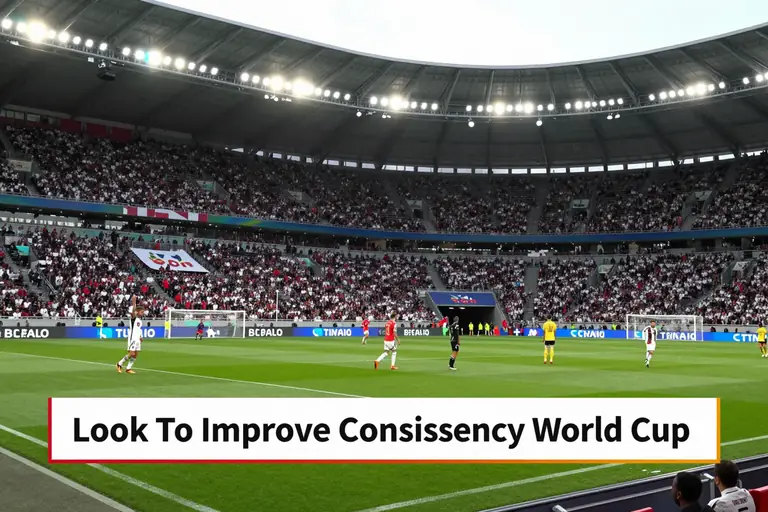
Germany Look To Improve Consistency Before World Cup: A Deep Dive into Their Preparations and Strategic Imperatives
The murmurs from football pundits and fans alike are growing louder: Germany, a perennial powerhouse in international football, is at a crossroads. As the next World Cup looms large on the horizon, the pressure is mounting for the Mannschaft to deliver a performance befitting their storied history. The overarching sentiment within the camp, echoed by coaching staff and players, is clear: Germany Look To Improve Consistency Before World Cup. This isn’t just a talking point; it’s a strategic imperative that will define their chances.
Recent international breaks have offered glimpses of both brilliance and bewildering lapses. One match might see them dismantle a strong opponent with fluid attacking play and rock-solid defense, only for the next to expose vulnerabilities against what should be an easier challenge. This Jekyll and Hyde nature is precisely what the coaching staff, led by Hansi Flick, is determined to iron out. The focus is squarely on ensuring that when the whistle blows for their first World Cup match, the team is performing at a high, predictable level, every single time. It’s a massive undertaking, but one essential if Germany wants to lift the coveted trophy once more. The quest for consistency is not merely about winning individual matches but about cultivating a sustained level of excellence that can withstand the immense pressures and varying challenges of a World Cup campaign. This ambition reflects a deep understanding that past glories, while inspiring, do not guarantee future success without rigorous preparation and a clear strategic vision.
Addressing Defensive Lapses and Building a Solid Foundation
One of the most frequently cited areas for improvement is the defense. While individual talents are undeniable, the collective organization and communication have sometimes faltered. Opponents have found it too easy to exploit gaps, particularly during transitions. This isn’t just about the back four; it involves the entire team’s commitment to defensive duties, from the forwards pressing high to the midfielders tracking back diligently. To truly succeed, Germany Look To Improve Consistency Before World Cup, especially in their defensive shape and resilience.
- Communication: Enhancing vocal leadership and clear instructions across the backline and midfield. This includes developing non-verbal cues and intuitive understanding between players, crucial for split-second decisions in high-stakes situations.
- Positional Discipline: Ensuring players maintain their tactical positions, particularly when out of possession. This requires meticulous training on defensive rotations, covering spaces left by attacking full-backs, and maintaining compact lines to deny opponents space.
- Set-Piece Organization: A recurring issue has been conceding from set-pieces, which needs immediate and thorough attention. This involves dedicated training sessions for both offensive and defensive set-piece routines, assigning specific roles, and practicing various scenarios to eliminate vulnerabilities.
- Full-back Coverage: Balancing the attacking prowess of the full-backs with their defensive responsibilities. Modern football demands full-backs to be significant contributors in attack, but this cannot come at the expense of defensive stability. Strategies for midfield and central defenders to cover when full-backs push forward are essential.
- Pressing Schemes: Implementing a more cohesive and aggressive pressing system from the front. This aims to win the ball back high up the pitch, reducing the pressure on the defense and creating immediate attacking opportunities. The timing and coordination of the press are critical to avoid leaving gaps.
The training sessions leading up to the tournament are expected to heavily emphasize these aspects. Drills focusing on defensive partnerships, covering runs, and quick recovery after losing possession will be paramount. The aim is to forge a defensive unit that inspires confidence, not anxiety, among fans. This foundational strength is non-negotiable if Germany expects to make a deep run in the tournament. They know that to truly contend, Germany Look To Improve Consistency Before World Cup, and that starts from the back. The coaching staff is reportedly analyzing historical data and opponent tendencies to tailor defensive strategies, ensuring the team is well-prepared for any attacking threat they might face.
Unlocking Attacking Potential with Greater Flow
On the attacking front, Germany possesses an embarrassment of riches. Young, dynamic talents combine with experienced campaigners, creating a formidable pool of options. However, the connection between midfield and attack, and the final decision-making in the opponent’s third, have occasionally been inconsistent. Sometimes the intricate passing patterns fail to translate into clear-cut chances, or the finishing isn’t clinical enough. The coaching staff is working on fostering greater fluidity and understanding between the attacking players.
- Player Link-up Play: Developing instinctive understanding and movement between forwards and attacking midfielders. This involves countless hours of practice in small-sided games and specific drills designed to enhance telepathy and anticipation, ensuring players know where their teammates will be and what runs they will make.
- Clinical Finishing: Intensive drills to sharpen shooting accuracy and composure in front of goal. This isn’t just about power but about placement, decision-making under pressure, and varying shot types to beat goalkeepers. Utilizing advanced analytics to identify preferred shooting zones and techniques for individual players can also play a role.
- Creative Overload: Utilizing the width of the pitch effectively and creating numerical advantages in attacking areas. This includes overlapping full-backs, inverted wingers, and midfielders making late runs into the box. The aim is to stretch defenses and create space for penetrating passes and shots.
- Pressing Triggers: Implementing clear signals for when to press high and win the ball back in dangerous positions. This aggressive approach aims to recover possession quickly in the opponent’s half, leading to rapid transitions and scoring opportunities before the opposition can regroup.
- Varying Attacking Approaches: Developing the ability to break down different types of defenses. Against deep-sitting teams, intricate passing and clever movement are needed, while against high-pressing teams, quick counter-attacks and direct play become crucial. The team needs to be adaptable.
The ability to consistently convert possession and territorial dominance into goals is a hallmark of World Cup winners. For Germany, unlocking this consistent attacking output is as crucial as shoring up the defense. The team needs to be able to break down stubborn defenses with varied approaches, not just rely on individual moments of brilliance. This holistic approach to their game is why Germany Look To Improve Consistency Before World Cup across all departments. The coaching staff is experimenting with different attacking formations and personnel combinations to find the most effective and consistent goal-scoring formula.
Midfield Dominance: The Engine Room’s Role
The midfield is often considered the engine room of any successful team, and for Germany, this holds true. The battle for midfield supremacy in international football is fierce, and controlling the tempo, winning second balls, and distributing possession effectively are vital. Germany has a wealth of midfield talent, but ensuring they operate as a cohesive unit, both defensively and offensively, is key. The transition from defense to attack, and vice versa, often hinges on the midfield’s performance.
“Our midfield needs to dictate the pace of the game,” remarked a former German international. “They need to be the bridge, connecting the defense to the attack seamlessly and providing cover when needed. Without that consistent control, it’s very difficult to maintain pressure or absorb it. The ability of the midfielders to win the ball back quickly, initiate attacks, and shield the defense is paramount to any team’s success in a major tournament. This isn’t just about individual skill; it’s about collective intelligence and tireless work ethic.”
Training will focus on tactical awareness, quick decision-making under pressure, and the ability to switch play effectively. The synergy between the holding midfielders and the more advanced playmakers will be critical. If the midfield can consistently dominate proceedings, it will provide a stable platform for the entire team to perform at its best. This consistent performance from the central players is another facet where Germany Look To Improve Consistency Before World Cup. Specific drills will be implemented to improve:
- Ball Retention: Mastering techniques to keep possession under pressure and recycle the ball efficiently.
- Progressive Passing: Encouraging midfielders to look for forward passes that break lines and create attacking momentum.
- Defensive Screening: Ensuring holding midfielders effectively shield the defense, intercept passes, and win tackles.
- Transitional Play: Rapidly switching from defense to attack and vice versa, with midfielders playing a pivotal role in initiating quick counters or slowing down opposition breaks.
- Set-Piece Delivery: Refining the quality and variety of deliveries from corners and free-kicks, as midfielders often take on this responsibility.
The tactical intelligence of the midfield unit will be a significant factor in Germany’s ability to control games and impose their style of play. Their capacity to adapt to different opposition formations and strategies, while maintaining their own consistent performance level, will be rigorously tested.
Mental Fortitude and Big Match Temperament
Beyond the tactical and technical aspects, the mental side of the game cannot be underestimated, especially in a tournament as demanding as the World Cup. Past German teams have been renowned for their mental toughness, their ability to grind out results, and their unwavering belief even when facing adversity. Recent tournaments, however, have shown moments where this resolve seemed to waver. Building back that unshakeable mental fortitude is a significant part of the preparation.
This involves:
- Psychological Training: Working with sports psychologists to enhance focus, resilience, and stress management. This includes visualization techniques, mindfulness exercises, and strategies for maintaining composure in high-pressure situations.
- Team Bonding: Fostering a strong sense of camaraderie and collective responsibility within the squad. Activities designed to strengthen interpersonal relationships and build trust are crucial for a cohesive unit.
- Leadership Development: Empowering key players to take on leadership roles on and off the pitch. Identifying natural leaders and providing them with tools and support to guide the team through challenging moments.
- Scenario Training: Practicing playing from behind, defending a lead, and managing tough game situations. Simulating various match conditions and pressures in training helps players develop adaptive responses.
- Managing Expectations and Pressure: Providing players with strategies to cope with the immense media scrutiny and fan expectations that come with representing Germany at a World Cup.
The World Cup is as much a test of character as it is of skill. Teams that can maintain their composure under immense pressure, adapt to changing game states, and perform consistently for 90 minutes (or more) are the ones that go far. This mental strength is a crucial component as Germany Look To Improve Consistency Before World Cup. They understand that a strong mind can often overcome physical fatigue or tactical setbacks. The coaching staff is keen to instill a ‘never-say-die’ attitude that has historically defined German football.
Squad Rotation and Managing Player Load
With a packed international calendar and demanding club seasons, managing player fatigue and preventing injuries is paramount. The coaching staff will need to be astute in their squad selection and rotation, not just during the World Cup, but in the build-up friendlies as well. Giving key players enough rest while also ensuring everyone is match-fit and understands the tactical system is a delicate balancing act. The depth of the squad will be tested, and every player needs to be ready to step up when called upon.
This also means:
- Fitness Monitoring: Utilizing advanced sports science to track player physical data and prevent overtraining. GPS trackers, heart rate monitors, and recovery assessments are used to tailor individual training loads.
- Tactical Flexibility: Ensuring the squad can adapt to different formations and game plans without losing cohesion. This allows the coach to rotate players without a significant drop in performance or tactical understanding.
- Injury Prevention: Implementing targeted training programs and recovery protocols. This includes strength and conditioning, physiotherapy, and nutritional guidance to keep players in optimal physical condition.
- Depth Utilization: Trusting the entire squad, not just the starting XI. Players coming off the bench must be able to seamlessly integrate and maintain or even elevate the team’s performance.
- Travel Logistics: Meticulously planning travel schedules, accommodation, and training facilities to minimize disruption and maximize recovery during the tournament.
A fresh, fit, and motivated squad is a prerequisite for consistent performance. The ability to bring in quality players from the bench who can immediately impact the game is a luxury that Germany possesses, but it must be utilized wisely. The overall health and readiness of the entire squad will directly contribute to how Germany Look To Improve Consistency Before World Cup. This strategic management of player resources is a modern necessity in elite football.
The Road Ahead: Friendlies and Final Preparations
The upcoming international friendlies and training camps are not just warm-up matches; they are crucial testing grounds. These games offer the coaching staff invaluable opportunities to experiment with different line-ups, fine-tune tactics, and assess player form under match conditions. Every minute on the pitch, every training drill, and every team meeting is a step towards achieving that desired level of consistency. The results of these preparatory games will be less important than the performances themselves, though positive results certainly help build confidence.
The focus will be on:
- Implementing Game Plans: Seeing if tactical instructions are being executed effectively against varied opposition styles.
- Building Chemistry: Allowing new partnerships to flourish and existing ones to strengthen through competitive play.
- Assessing Player Form: Identifying which players are peaking at the right time and who is best suited for specific roles within the team’s system.
- Refining Set Pieces: Both offensive and defensive set-piece routines need to be perfected, as these can often be decisive in tight World Cup matches.
- Adapting to Adversity: Observing how the team responds to conceding early goals, controversial decisions, or injuries during matches.
- Opponent Analysis: Using these matches to simulate potential World Cup opponents and refine strategies accordingly.
This period of intense preparation is where the foundations for a successful World Cup campaign will be laid. The journey to the World Cup is a marathon, not a sprint, and every single step needs to be purposeful. The goal remains unwavering: Germany Look To Improve Consistency Before World Cup, ensuring they arrive at the tournament as a cohesive, formidable unit ready to challenge for the ultimate prize. The culmination of these efforts will determine whether Germany can once again assert itself as a dominant force on the global stage.
The German national team has a proud tradition of rising to the occasion on the biggest stages. While recent years have presented challenges, the talent and determination within the squad are undeniable. The emphasis on consistency is a direct response to these challenges, a clear signal that the team is learning from its past and adapting for the future. The footballing world will be watching closely as Germany Look To Improve Consistency Before World Cup, hoping to see the return of the dominant force they know and respect. The blend of tactical acumen, physical readiness, and mental strength will be key to their aspirations, and if they can achieve the consistency they seek, they will undoubtedly be a force to be reckoned with.
FAQ
What are the key areas Germany is focusing on for improvement?
Germany is primarily focusing on achieving greater defensive solidity, enhancing attacking fluidity and clinical finishing, and ensuring consistent midfield dominance to control games. Additionally, they are heavily investing in psychological conditioning to build mental fortitude and strategically managing player load to prevent injuries and ensure peak performance throughout the demanding tournament. The overarching aim is for Germany Look To Improve Consistency Before World Cup across all aspects of their game, from individual player performance to collective team cohesion and tactical execution.
How will the coaching staff address the issue of inconsistency?
The coaching staff plans to address inconsistency through a multi-faceted approach. This includes intensive tactical training focusing on refining defensive organization, implementing precise attacking patterns, and developing intuitive player link-up play. They are also employing psychological conditioning to build mental resilience and composure under pressure, alongside strategic squad rotation and advanced fitness monitoring to manage player fatigue and maintain physical peak condition. The aim is to foster stronger team chemistry, improve communication channels, and ensure a cohesive unit that can perform at a consistently high level, thereby allowing Germany Look To Improve Consistency Before World Cup.
What role do the upcoming friendly matches play in their preparation?
The upcoming friendly matches are crucial testing grounds for Germany’s World Cup preparations. They serve as invaluable opportunities for the coaching staff to experiment with different line-ups and tactical variations against varied opposition. These games allow them to fine-tune strategies, assess individual player form and readiness under match conditions, and build essential team chemistry and understanding. Furthermore, they are vital for identifying and rectifying any remaining weaknesses, practicing set-piece routines, and simulating the pressures of a major tournament, all of which are indispensable steps in the team’s journey to ensure Germany Look To Improve Consistency Before World Cup.
How important is mental toughness for Germany’s World Cup campaign?
Mental toughness is considered paramount for Germany’s World Cup campaign. The coaching staff recognizes that the tournament is not only a test of skill and tactics but also of character and resilience. Emphasis is placed on psychological training to enhance focus, manage stress, and maintain composure in high-pressure situations. Building strong team cohesion and empowering leaders within the squad are also key to fostering a ‘never-say-die’ attitude. The ability to adapt to adversity, play from behind, or defend a lead consistently throughout the tournament is seen as a critical factor for success, underscoring that a strong mind can often be as crucial as physical prowess for Germany to achieve its goal of consistency.
What strategies are in place for managing player fitness and preventing injuries?
To manage player fitness and prevent injuries, Germany is implementing a comprehensive strategy that combines advanced sports science with careful squad management. This includes meticulous fitness monitoring using cutting-edge technology to track individual player loads and recovery rates, allowing for tailored training programs. Strategic squad rotation during build-up matches and the tournament itself will ensure key players receive adequate rest. Furthermore, targeted injury prevention programs, including strength and conditioning, physiotherapy, and nutritional guidance, are in place. The goal is to ensure the entire squad is fresh, fit, and motivated, minimizing the risk of injuries and ensuring maximum performance consistency from every player, which is vital as Germany Look To Improve Consistency Before World Cup.