
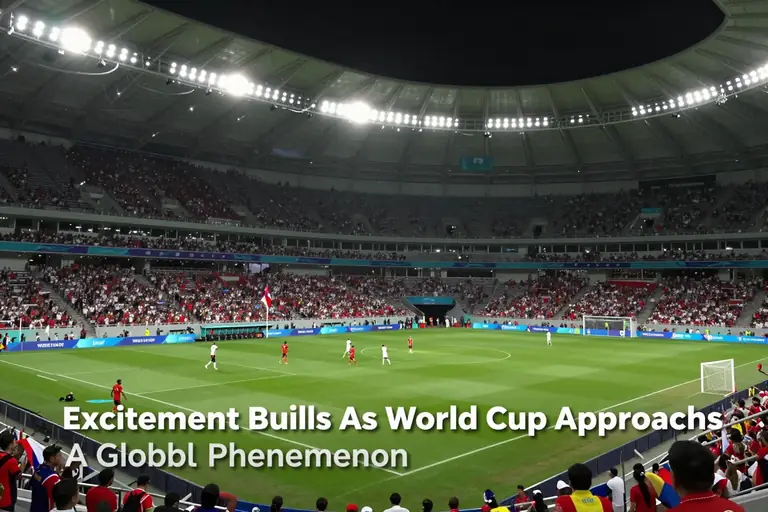
The Unparalleled Global Spectacle: Excitement Builds As World Cup Approaches
There’s a unique hum in the air, a collective anticipation that transcends borders and cultures. It’s the unmistakable feeling that only one event can bring to the world of sports: the FIFA World Cup. As the tournament inches closer, the excitement builds as World Cup approaches, gripping millions in its embrace. From bustling city centers to remote villages, conversations turn to tactics, predictions, and the hopes of national glory. This isn’t just a football competition; it’s a global festival, a month-long celebration of passion, athleticism, and national pride. Indeed, the excitement builds as World Cup approaches, creating a universal buzz.
For many, the World Cup is more than just a series of matches. It’s a quadrennial pilgrimage, a chance to witness history in the making. The stories of underdogs defying expectations, of legendary players etching their names into the annals of time, and of entire nations uniting behind their colors are what make this event truly special. Every four years, the world pauses, captivated by the drama unfolding on the pitch. The excitement builds as World Cup approaches, fueled by memories of past triumphs and the promise of new heroes. This palpable anticipation means that the excitement builds as World Cup approaches for fans globally.
The World Cup represents the pinnacle of international football, a stage where dreams are realized and legends are born. Its magnetic appeal lies not only in the high-stakes competition but also in its ability to unite people from all walks of life. Whether you’re a lifelong football fanatic or a casual observer, the World Cup has a way of drawing you into its narrative. The sheer scale of the event, from the meticulous planning of host nations to the global broadcast reach, underscores its status as a true global phenomenon. As the days tick down, the anticipation becomes almost palpable, a shared heartbeat across continents. The excitement builds as World Cup approaches, creating a universal language of hope and expectation.
The Road to Glory: Teams Gearing Up for the Ultimate Challenge
Qualifying for the World Cup is an arduous journey in itself, a testament to the dedication and skill required to compete at the highest level. Teams from every continent have battled through grueling campaigns, overcoming formidable opponents to secure their coveted spots. Now, with the final roster of participants set, the focus shifts to preparation. Coaches are meticulously planning strategies, players are pushing their limits in training, and national federations are ensuring every detail is perfect. The excitement builds as World Cup approaches, not just for fans, but for the athletes themselves, who dream of lifting that iconic trophy.
- Intensive training camps are underway, focusing on fitness, tactics, and team cohesion. Sports scientists, nutritionists, and psychologists are integral parts of these camps, ensuring players are in optimal physical and mental states. The excitement builds as World Cup approaches, even behind the scenes.
- Friendly matches are being played to fine-tune formations and test new strategies against international competition, often providing crucial insights into team dynamics and individual player performance under pressure. These matches are carefully selected to simulate potential World Cup scenarios.
- Medical teams are working tirelessly to ensure players are in peak physical condition and minimize injury risks, implementing advanced recovery protocols and personalized injury prevention programs. The health of key players can often make or break a team’s chances.
- Analysts are poring over opponent footage, identifying strengths and weaknesses to exploit, using state-of-the-art data analytics and video analysis software to gain a competitive edge. This forensic approach to preparation leaves no stone unturned.
- Logistical planning is a monumental task, involving travel arrangements, accommodation, training facilities, and security for hundreds of players, staff, and officials. Every detail is meticulously coordinated to ensure a seamless experience for the participating nations.
- Media training and public relations strategies are also part of the preparation, as teams anticipate intense scrutiny and manage expectations from their home countries and the global media.
The pressure is immense, but so is the potential reward. For players, representing their country on the biggest stage is the pinnacle of their careers. For coaches, it’s a chance to cement their legacy. And for fans, it’s an opportunity to witness their national heroes perform under the brightest spotlights. There’s a palpable sense of anticipation, and the excitement builds as World Cup approaches, reaching a fever pitch as kickoff draws near. The final squad selections, often agonizing decisions for coaches, become headlines themselves, sparking national debates and fueling fan discussions. Each team arrives with a unique story, a blend of seasoned veterans and rising stars, all united by the common goal of World Cup glory.
Beyond the Pitch: The Economic and Cultural Impact
The World Cup’s influence extends far beyond the stadiums and training grounds. Its economic impact is substantial, bringing a significant boost to the host nation through tourism, infrastructure development, and job creation. Hotels fill up, restaurants thrive, and local businesses experience a surge in demand for everything from merchandise to transportation services. The tournament also serves as a powerful platform for cultural exchange, as fans from diverse backgrounds congregate, sharing their love for the beautiful game and experiencing new traditions, cuisines, and hospitality. The excitement builds as World Cup approaches, not just for the matches, but for the broader global celebration it represents.
“The World Cup is a unique phenomenon that transcends sport. It’s a catalyst for national pride, economic growth, and cultural understanding. Every four years, it reminds us of our shared humanity and the power of collective passion. It’s an investment in a nation’s future, a moment to showcase its capabilities and welcome the world.”
The media frenzy surrounding the event is also unparalleled. Journalists, broadcasters, and content creators from all corners of the globe descend upon the host nation, eager to capture every moment, every story, and every emotion. Satellite trucks, temporary studios, and thousands of accredited media personnel transform cities into bustling hubs of news and analysis. Social media platforms explode with discussions, debates, and celebrations, creating a truly interactive and immersive experience for fans worldwide. Hashtags trend globally, memes are created instantly, and fan-generated content adds another layer to the narrative. As the event draws closer, the excitement builds as World Cup approaches, creating a global conversation that dominates headlines, timelines, and water cooler discussions. The economic ripple effect extends globally, with increased sales of televisions, sportswear, and food and beverages as people prepare for viewing parties and celebrations.
Fan Fervor: A Sea of Colors and Chants
Perhaps the most defining characteristic of the World Cup is the incredible fan support. From the moment the first whistle blows to the final trophy presentation, stadiums are transformed into a vibrant tapestry of colors, flags, and passionate supporters. Chants reverberate, drums beat rhythmically, and the atmosphere becomes electric, often creating a deafening roar that can influence the game itself. Fans travel thousands of miles, investing their time, money, and emotions into supporting their beloved teams, often painting their faces, donning elaborate costumes, and learning songs and chants in anticipation. This unwavering loyalty creates an unforgettable spectacle, both inside and outside the venues. The excitement builds as World Cup approaches, and fans are meticulously planning their journeys, their outfits, and their strategies for cheering on their nations.
Even for those who can’t attend in person, the World Cup is a communal experience. Families gather around televisions, friends meet at pubs and sports bars, and communities organize massive public viewing parties in parks and plazas. The shared experience of watching a match, celebrating a goal, or commiserating over a loss fosters a sense of unity and camaraderie that is rare in modern society. It’s a time when political differences are often momentarily set aside, and everyone is united by their love for the game and their national pride. The emotional rollercoaster of the tournament, from nail-biting finishes to dramatic upsets, creates shared memories that last a lifetime. The excitement builds as World Cup approaches, and people are already making plans for how they’ll experience this global phenomenon, from setting up fantasy leagues to decorating their homes with national colors.
Key Players to Watch: Who Will Shine on the Global Stage?
Every World Cup brings forth new stars and solidifies the legacies of existing ones. This edition will be no different. Football pundits and fans alike are already speculating about which players will rise to the occasion and deliver match-winning performances. From prolific goal-scorers to defensive stalwarts, from creative midfielders to agile goalkeepers, the tournament is a showcase of the world’s finest footballing talent. The tactical battles between coaches will often hinge on the individual brilliance of these players. The excitement builds as World Cup approaches, with discussions centering on potential Golden Boot winners, breakout stars, and the players who will define their nations’ campaigns.
- Seasoned Veterans: Many established superstars will be looking to add another chapter to their illustrious careers, potentially playing in their final World Cup. Their experience, leadership, and ability to perform under immense pressure will be invaluable to their teams. These players often carry the hopes of an entire nation on their shoulders.
- Rising Stars: A new generation of talent is eager to make their mark. These young players, full of energy, audacity, and skill, could be the ones to surprise everyone and announce their arrival on the global stage, potentially becoming household names overnight with a standout performance.
- Tactical Masterminds: The coaches play a crucial role. Their ability to adapt their strategies, motivate their squads, make critical in-game decisions, and deploy their players effectively will be key to navigating the challenging group stages and knockout rounds. Their pre-tournament preparations and in-game adjustments are often as vital as the players’ performances.
- Goalkeepers and Defenders: While strikers often grab the headlines, the importance of a solid defense and an in-form goalkeeper cannot be overstated. A single save or a crucial tackle can change the momentum of a match and ultimately decide a team’s fate.
- Midfield Maestros: The battle for control of the midfield is often where games are won and lost. Players who can dictate the tempo, create chances, and break up opposition attacks will be pivotal to their team’s success.
The individual battles within the matches will be just as compelling as the team contests. A striker facing off against a world-class defender, a midfielder’s duel for control of the center of the park, or a goalkeeper’s heroics under immense pressure – these are the moments that define World Cup drama and are etched into the memories of fans. The narratives woven around these individual performances become part of the tournament’s rich tapestry. The excitement builds as World Cup approaches, and everyone is eager to see which players will step up and become heroes, creating their own indelible moments in World Cup history.
The Legacy of the World Cup: Inspiring Future Generations
Beyond the immediate spectacle, the World Cup leaves a lasting legacy. It inspires countless young children to dream of becoming footballers, to practice tirelessly, and to pursue their passion for the game. It fosters a love for sports and encourages physical activity, driving participation at grassroots levels. The images of victorious captains lifting the trophy, of jubilant fans celebrating, and of players embracing after a hard-fought match are etched into collective memory and serve as powerful motivators for aspiring athletes. It’s a cyclical process where current heroes inspire the next generation of talent. The excitement builds as World Cup approaches, and with it, the hope that this tournament will once again ignite the dreams of a new generation.
The infrastructure built for the event, from state-of-the-art stadiums to improved transportation networks and renovated public spaces, often continues to benefit the host country for years to come, providing tangible long-term assets. The increased global visibility can boost tourism and foreign investment long after the final whistle has blown, enhancing a nation’s international profile. More importantly, the shared experience of the World Cup creates bonds between people, transcending political, social, and economic divides, even if only for a short period. It reminds us of the unifying power of sport and its capacity to foster a sense of global community. It’s a powerful demonstration of what can be achieved when nations come together in friendly competition. As the excitement builds as World Cup approaches, we are reminded of its profound and enduring impact on the world, shaping not just sporting history but also cultural landscapes.
Indeed, the countdown has truly begun. Every day brings us closer to the kick-off of what promises to be another unforgettable chapter in football history. The world is ready, the teams are prepared, and the fans are buzzing with an intensity that only the World Cup can generate. From the smallest villages to the largest metropolises, the collective anticipation is building to a crescendo. The excitement builds as World Cup approaches, and we can all feel the thrill of anticipation for the beautiful game’s grandest stage, where heroes will be made, hearts will be broken, and the world will once again unite under the banner of football. This rising anticipation is a testament to how the excitement builds as World Cup approaches year after year.
FAQ
When does the World Cup typically take place?
The FIFA World Cup is usually held every four years, typically during the months of June and July, aligning with the summer break for many major football leagues. However, specific editions might have adjusted timings due to host country climate considerations, such as the 2022 tournament in Qatar which was held in November and December to avoid the intense summer heat. The period leading up to it is when the excitement builds as World Cup approaches.
How many teams participate in the World Cup finals?
Currently, 32 national teams compete in the FIFA World Cup finals, having successfully navigated a rigorous qualification process that spans several years. This number is set to expand to 48 teams for future editions, starting from 2026, which will introduce an even larger global spectacle and provide more nations with the opportunity to participate on the world stage. As more teams qualify, the excitement builds as World Cup approaches.
Where can I find official information and updates about the World Cup?
The official FIFA website (www.fifa.com) is the primary and most authoritative source for all official news, schedules, team information, player profiles, historical data, and real-time updates regarding the World Cup. Additionally, major international sports news outlets, national broadcasters, and reputable football journalism platforms provide extensive coverage, analysis, and supplementary content leading up to and during the tournament. This stream of information further contributes to how the excitement builds as World Cup approaches.
What is the significance of the World Cup for the host nation?
Hosting the World Cup carries immense significance for a nation. Economically, it can lead to massive investments in infrastructure, boost tourism, and create numerous jobs. Culturally, it offers an unparalleled opportunity to showcase the host nation’s heritage, hospitality, and natural beauty to a global audience. Politically, it can enhance a nation’s international standing and foster a sense of national pride and unity. However, it also comes with significant organizational challenges and financial commitments. For the host, the excitement builds as World Cup approaches for years in advance.
How does the World Cup impact youth football development?
The World Cup has a profound impact on youth football development globally. It inspires millions of children and teenagers to take up the sport, dreaming of one day representing their country on the grandest stage. National football associations often leverage the excitement generated by the World Cup to launch or expand grassroots programs, invest in youth academies, and develop coaching resources, aiming to nurture the next generation of footballing talent. The visibility of the tournament also highlights the importance of physical activity and teamwork. This inspiration is a key reason why the excitement builds as World Cup approaches for young athletes everywhere.