
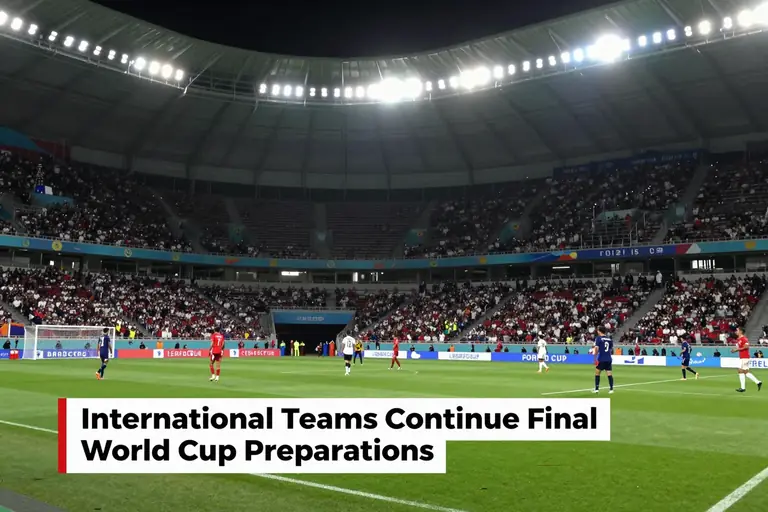
The Road to Glory: International Teams Continue Final World Cup Preparations
The air is thick with anticipation, charged with the collective hopes and dreams of billions. From the bustling streets of Rio de Janeiro to the quiet, secluded training grounds nestled in the European countryside, the focus is singular, unwavering, and all-consuming: the upcoming World Cup. With mere weeks left until the opening whistle pierces the air, signaling the start of the greatest football spectacle on Earth, International Teams Continue Final World Cup Preparations. This phase, often overlooked by casual observers, is arguably as intense, demanding, and strategically vital as the tournament itself. It’s not merely about physical conditioning; it’s a multi-faceted endeavor encompassing mental fortitude, intricate tactical refinement, the delicate art of forging an unbreakable bond among players, and the meticulous management of every minute detail that could sway the balance between triumph and heartbreak. Each national squad has been meticulously planning for this moment for years, but these final weeks are where the theoretical meets the practical, where strategies are honed, and where the true mettle of a team is forged.
Coaches, often under immense public and media scrutiny, are making those last-minute, career-defining decisions on starting lineups, tweaking formations with surgical precision, and instilling a profound sense of belief that can be the ultimate difference-maker. The pressure is immense, a colossal weight resting on the shoulders of players and staff alike, but so too is the potential reward – the chance to etch their names into history and bring unparalleled joy to their nations.
Intensive Training Camps and The Crucible of Friendly Matches
A significant, foundational pillar of how international teams continue final World Cup preparations involves rigorous, often sequestered, training camps. These camps are strategically located, frequently chosen for their ability to mimic the climate, altitude, and general conditions of the host nation. This foresight allows players to acclimatize gradually, minimizing the shock of environmental changes and preempting any last-minute surprises that could hinder performance. Sessions are meticulously designed to push players to their absolute physical limits, ensuring they reach and maintain peak performance precisely when it matters most. From grueling endurance drills that build stamina to explosive speed work that hones agility, every conceivable aspect of a player’s physical readiness is scrutinized, analyzed, and optimized. GPS trackers, heart rate monitors, and advanced sports science techniques are employed to monitor every athlete’s progress, preventing overtraining while maximizing output.
Beyond the physical grind, friendly matches play an absolutely crucial, often underestimated, role. These are not merely exhibition games; they are vital opportunities for coaches to test nascent strategies, experiment with different player combinations in a competitive setting, and, most importantly, identify any weaknesses or chinks in the armor that need immediate addressing. For many players, especially those on the fringe, these friendlies represent their last, desperate chance to impress the coaching staff and secure a coveted spot in the starting XI for the opening group stage match. The results of these matches, while not always a definitive predictor of World Cup performance, provide invaluable insights and often dictate the final, critical tactical adjustments. It’s a delicate, high-stakes balance: winning breeds confidence and can build momentum, but identifying and rectifying flaws, even in a loss, is arguably even more critical at this advanced stage. For instance, a coach might intentionally pit their team against an opponent known for a particular style – perhaps a fast-paced counter-attacking side – specifically to gauge how their defense copes under such pressure. Or, they might observe how their midfield distributes the ball under an intense, high press from a technically superior team. These simulated, yet competitive, scenarios are invaluable learning experiences, offering real-time data and tactical feedback that no amount of training ground drills can replicate. The stakes are undeniably high, and the scrutiny from both fervent fans and relentless media is unrelenting as International Teams Continue Final World Cup Preparations, knowing every decision could be a game-changer.
Squad Selection, Tactical Dilemmas, and the Art of Neutralizing Threats
One of the most agonizing, high-pressure aspects for any national team coach during this period is the final squad selection. This process is fraught with tough decisions, often necessitating the painful exclusion of deserving players who have dedicated years to their craft. The criteria extend far beyond pure talent; team chemistry, player versatility across different positions, and even individual personality traits play a significant, often understated, part. A harmonious, cohesive dressing room can be an incredibly powerful asset, fostering mutual trust and collective resilience. Conversely, internal strife or personality clashes, even among supremely talented individuals, can derail the ambitions of even the most formidable squad. Coaches often prioritize players who are ‘good in the locker room’ and who embody the team’s spirit, recognizing that collective unity can often outweigh individual brilliance.
Tactical dilemmas also loom exceptionally large, demanding meticulous consideration. Does a coach adhere rigidly to a tried-and-tested formation that has brought previous success, or do they adapt their system to exploit the strengths and mitigate the weaknesses of their specific opponents in the group stage? Should the tactical blueprint prioritize an impenetrable defense, focusing on clean sheets and opportunistic counter-attacks, or should it lean into an explosive, free-scoring attack, aiming to outscore every opponent? These are not easily answered questions; they demand careful analysis, strategic foresight, and a deep understanding of the team’s inherent capabilities and the opponents’ characteristics. This strategic period is precisely where International Teams Continue Final World Cup Preparations, laying down their ultimate blueprint for success, a plan that is often the culmination of years of scouting and analysis.
The coaching staff, supported by an army of analysts, meticulously dissects potential opponents. This involves an exhaustive analysis of their playing styles, identifying key individual players, understanding their historical tendencies, and recognizing any recent tactical shifts. This intelligence gathering is absolutely crucial for developing nuanced game plans that can effectively exploit weaknesses, neutralize specific threats, and anticipate the flow of play. It’s a sophisticated chess match played out on the training pitch and in meeting rooms, long before it even reaches the hallowed turf of the stadium. Every set-piece routine, every preferred attacking channel, every defensive vulnerability, and even the temperament of key opposing players are cataloged and analyzed. This forensic attention to detail is what separates contenders from pretenders.
The Mental Game: Forging Confidence and Unyielding Resilience
While the physical and tactical preparations are overtly visible and extensively discussed, the mental aspect of the game is often overlooked by the public, yet it is equally, if not more, vital. The pressure on these elite athletes is immense, almost unimaginable. They carry the hopes of millions, sometimes tens of millions, of compatriots, and the sheer weight of expectation can be crushing, leading to anxiety, self-doubt, and burnout. Therefore, building unshakeable confidence and fostering unwavering resilience is a key, non-negotiable component of how International Teams Continue Final World Cup Preparations.
To address this, sports psychologists are increasingly integrated into national team setups, working intimately with players. Their role is multifaceted: helping athletes manage the intense stress, maintain razor-sharp focus amidst distractions, and develop a robust, winning mindset. Team-building exercises, designed to strengthen interpersonal bonds and collective trust, are commonplace. Motivational talks from coaches, former players, or even external experts aim to inspire and reinforce belief. Individual counseling sessions offer a confidential space for players to address personal anxieties or performance-related pressures. The overarching goal is to ensure that when the players finally step onto the pitch, they are not only physically primed and tactically aware but also mentally sharp, emotionally stable, and utterly convinced of their collective ability to succeed. A strong, unified mind can often overcome physical fatigue, tactical errors, and moments of adversity, transforming potential setbacks into opportunities. Coaches, as primary motivators, also play a significant role in fostering a positive, supportive team environment. They need to inspire their players, instill unwavering belief in their abilities, and constantly remind them of the collective goal – the shared dream of lifting the trophy. A truly united team, where every player trusts and supports their teammates implicitly, is a formidable, almost unstoppable force. As news of World Cup Schedule Updates Announced For Fans Worldwide spreads, the focus on mental readiness intensifies, ensuring players are not just physically prepared but psychologically bulletproof for the global spectacle. This is a critical stage as International Teams Continue Final World Cup Preparations.
Logistics and Off-Field Management: The Unsung Heroes
Beyond the pitch, beyond the training ground, a massive, intricate logistical operation underpins every aspect of how International Teams Continue Final World Cup Preparations. This encompasses an astonishing array of details: from meticulously coordinated travel arrangements that minimize fatigue and jet lag, to securing optimal accommodation that provides comfort and privacy, to ensuring comprehensive medical support is available 24/7, and strictly adhering to precise dietary requirements tailored to each player’s needs. Every single detail, no matter how seemingly minor, needs to be meticulously planned, executed, and monitored to ensure players can focus solely, exclusively, and without distraction on their football.
Medical teams are on continuous high alert, managing any minor knocks or injuries, ensuring proper recovery protocols are followed, and implementing preventative measures to safeguard player health. Nutritionists work hand-in-hand with chefs to provide bespoke meals that not only fuel peak performance but also aid rapid recovery and maintain optimal body composition. Equipment managers ensure that all gear, from boots to training kits, is in perfect condition and readily available. These unsung heroes behind the scenes – the doctors, physios, nutritionists, chefs, logistics coordinators, and equipment staff – are absolutely critical to the success of any team. Their efficiency, professionalism, and foresight allow the players and coaching staff to concentrate entirely on their primary tasks, making sure that International Teams Continue Final World Cup Preparations without any unnecessary distractions, hitches, or worries.
The importance of a well-oiled logistical machine cannot be overstated. Any hiccup, no matter how seemingly insignificant – a delayed flight, a subpar meal, an uncomfortable bed – can disrupt a player’s routine, impact their sleep, affect their mood, and potentially, subtly, impact their performance on the pitch. Therefore, national federations invest heavily in ensuring that every single aspect of the team’s off-field life is managed with the utmost professionalism, precision, and foresight. This holistic, all-encompassing approach is not merely desirable; it is absolutely essential for any squad aiming for the pinnacle of global football glory. It creates an ecosystem where players feel supported, valued, and free to dedicate their full mental and physical energy to the game.
Monitoring Opponents and The Art of Strategic Advantage
A crucial, continuous element in the final stages of readiness is the relentless monitoring of opponents. While initial scouting reports are compiled months, even years, in advance, the period immediately leading up to the tournament allows for real-time, dynamic analysis of opponent form, recent tactical shifts, injury updates, and any new key players who might have emerged. This up-to-the-minute intelligence is vital for fine-tuning game plans, adapting strategies, and ensuring there are no surprises come match day. It’s about maintaining a constant pulse on the competition.
Video analysts work tirelessly, often through the night, dissecting countless hours of footage from friendly matches, recent qualifiers, and even league games, looking for patterns, individual player tendencies (both strengths and weaknesses), and potential vulnerabilities in their system. These granular insights are then meticulously compiled, summarized, and presented to the coaching staff and players, allowing them to gain a comprehensive understanding of exactly what they will be up against. This detailed, almost forensic, opponent analysis is fundamental to how International Teams Continue Final World Cup Preparations, providing them with a crucial strategic edge. Understanding an opponent’s preferred set-piece routines, their most dangerous attacking channels, their defensive pressing triggers, or even the subtle body language and temperament of their key players can provide an invaluable advantage. It’s about leaving no stone unturned in the relentless pursuit of victory. The more precise and comprehensive information a team possesses, the better equipped they are to adapt, react, and exploit opportunities during the high-pressure environment of a match. This diligent, almost obsessive, preparation is a hallmark of serious contenders for the World Cup trophy.
Fan Engagement, Public Relations, and National Unity
While the primary, overriding focus is undeniably on football, International Teams Continue Final World Cup Preparations also involve a delicate balancing act of managing immense fan expectations and navigating the complex landscape of public relations. Players are frequently engaged in media duties, interviews, press conferences, and various fan events. Balancing these often-demanding commitments with intense training schedules, rest, and recovery requires careful, strategic management from the federation and team management.
A positive, transparent relationship with the media and, crucially, with the fanbase can significantly boost team morale and help to forge a powerful sense of national unity and collective purpose behind the team. Conversely, negative press, undue media scrutiny, or perceived disconnect from the fans can add an immense, unwelcome layer of extra pressure on the players and staff. Federations work proactively to control the narrative, ensuring that messages are consistently positive, focused on the team’s readiness, determination, and collective spirit. This external management of perception and expectation is an integral part of the comprehensive approach as International Teams Continue Final World Cup Preparations, recognizing that public sentiment can be a powerful motivator or a debilitating burden.
Engaging actively with fans through social media channels, organizing carefully selected open training sessions, or facilitating public appearances can generate immense goodwill and strengthen the emotional bond between the team and its supporters. This deep connection with the populace often provides an extra, profound layer of motivation for the players, constantly reminding them of who they are playing for, the sacrifices they are making, and the joy they seek to bring. It’s a delicate, intricate dance between maintaining a laser-like focus on the task at hand and fostering an unshakeable sense of national pride and collective ownership in the team’s journey.
The Final Push: Embracing the Ultimate Challenge
As the countdown clock ticks relentlessly closer to zero, the intensity within each squad only grows. The final days and hours are a potent, intoxicating mix of nervous energy, unwavering focused determination, and the sheer, exhilarating excitement of what’s to come. For every nation, the dream of lifting the coveted World Cup trophy – the pinnacle of global football achievement – is palpable, a constant, burning flame. Every player and every staff member is acutely, profoundly aware of the immense magnitude of the task ahead, the historical significance of the opportunity.
This final push, this intense, condensed period, is where bonds are not just solidified but become unbreakable. It’s where last-minute instructions are absorbed with total concentration, where individual talents are seamlessly woven into a unified, synergistic force. It’s a period of immense, almost suffocating pressure, but crucially, it is also a period of profound opportunity – the chance to transcend individual limitations and achieve collective greatness. The journey to the World Cup is notoriously long, arduous, and filled with countless challenges, but these final weeks, where International Teams Continue Final World Cup Preparations, are perhaps the most critical, defining chapter before the main event finally unfolds. The entire world watches, holding its breath, eagerly awaiting the unparalleled spectacle that only the World Cup can deliver.
Every dribble practiced, every pass perfected, every tackle drilled into muscle memory now is a deliberate, calculated step towards that ultimate, cherished goal. The sacrifices made, the countless hours invested, the unwavering dedication, the tears, the sweat, the triumphs, and the heartbreaks – all culminate in this intensely focused period. The anticipation is not just confined to the feverish fans across the globe, but it resonates deeply, vibrating within the very core of the teams themselves, as they meticulously craft their final path to glory, ready to write their own chapter in football history.
FAQ
Q1: What is the primary focus for teams in the final weeks before the World Cup?
A1: The primary focus for International Teams Continue Final World Cup Preparations is a comprehensive blend of physical conditioning to ensure peak fitness and injury prevention, intricate tactical refinement through rigorous training and strategic friendly matches, and robust mental preparation to build unshakeable confidence, resilience, and team cohesion. This holistic approach ensures players are ready for the immense demands of the tournament.
Q2: Why are friendly matches so important during this preparation phase?
A2: Friendly matches are absolutely crucial because they serve as vital dress rehearsals. They allow coaches to test new strategies in a competitive environment, experiment with different player combinations, identify and rectify any weaknesses in the team’s system, and provide players with a final, high-pressure opportunity to impress for a spot in the starting lineup. They offer invaluable real-time feedback that cannot be replicated in training.
Q3: How do teams manage the immense pressure and expectations from fans and media?
A3: Teams employ a multi-pronged approach. This often includes integrating sports psychologists to help players manage stress, maintain focus, and develop mental fortitude. Additionally, federations engage in carefully managed public relations and fan engagement activities, such as controlled media access and social media interaction, to foster a positive team environment, channel national support effectively, and mitigate negative external pressures, all while International Teams Continue Final World Cup Preparations. The goal is to create a supportive bubble around the team.
Q4: What role do logistics and off-field management play in World Cup preparations?
A4: Logistics and off-field management are foundational to a team’s success. This involves meticulous planning for travel, accommodation, nutrition, medical support, and equipment. The goal is to eliminate any potential distractions or discomforts for the players and coaching staff, ensuring they can dedicate 100% of their focus and energy to training and strategy. A well-oiled logistical machine allows the team to operate efficiently and optimally.
Q5: How do teams use scouting and opponent analysis in the final weeks?
A5: In the final weeks, teams intensify their scouting and opponent analysis. Video analysts and coaching staff meticulously dissect recent footage of potential opponents to identify current form, tactical shifts, individual player tendencies (strengths and weaknesses), and set-piece routines. This detailed intelligence gathering is crucial for fine-tuning game plans, developing counter-strategies, and ensuring the team is fully prepared for every aspect of their adversaries’ play, thereby gaining a significant strategic advantage as International Teams Continue Final World Cup Preparations.