
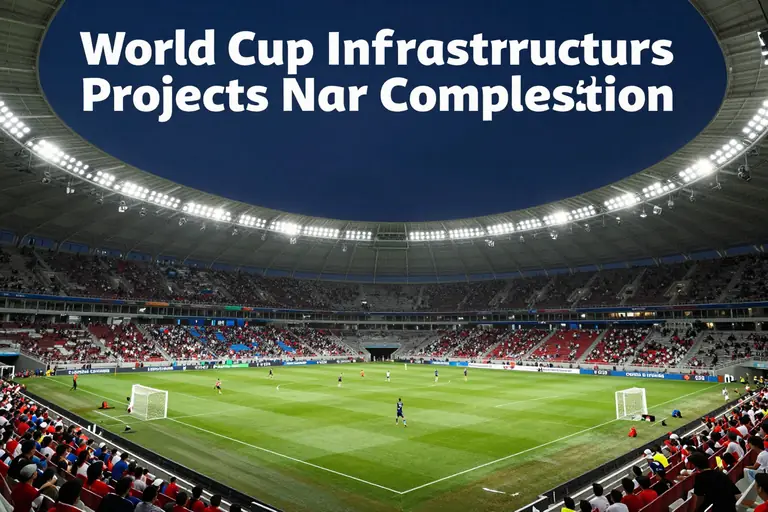
The Grand Scale of World Cup Preparations: Beyond the Pitch
The World Cup transcends its identity as a mere football tournament; it is a monumental global spectacle demanding unparalleled preparation across a multitude of fronts. From the construction of cutting-edge stadiums that redefine architectural possibilities to the meticulous engineering of efficient transportation networks and the provision of comfortable, diverse accommodations, the host nation embarks on a comprehensive and often transformative journey. This transformation is far from a series of temporary fixes; it inherently involves long-term, strategic investments designed to yield benefits for the country for decades to come. As the global event draws inexorably closer, the collective excitement builds exponentially, and with it, an intensified focus on the readiness and operational efficacy of these crucial infrastructural elements. Indeed, a significant majority of the World Cup Infrastructure Projects Near Completion, serving as a powerful testament that the host nation is poised and almost entirely ready to extend a grand welcome to the world.
The sheer magnitude and complexity of these undertakings are nothing short of remarkable. Billions of dollars, euros, or local currency units are meticulously invested, and countless man-hours are dedicated by an army of highly skilled engineers, construction workers, urban planners, and project managers. It is an arduous race against the clock, a logistical marathon that, historically, consistently yields impressive and often groundbreaking results. The enduring legacy of these projects frequently extends far beyond the final whistle of the tournament, positively impacting sectors such as tourism, stimulating local economies, and driving significant urban development. The global community watches intently, not only the athletic prowess displayed by the teams on the field but also the meticulous planning, innovative design, and flawless execution unfolding behind the scenes. This intense level of international scrutiny acts as a powerful catalyst, ensuring that every minute detail, from the pristine quality of the playing pitch to the seamless ease of visitor movement within and between venues, is perfected to the highest possible standard.
Stadiums: The Beating Heart and Architectural Icons of the Tournament
At the very core of any World Cup lie its stadiums, magnificent arenas where sporting history is forged and legends are definitively born. These are not merely functional football grounds; they are often architectural marvels, meticulously designed to host tens of thousands of passionate fans while simultaneously providing world-class facilities for the elite players, coaching staff, and the global media contingent. The task of building entirely new stadiums or undertaking extensive, multi-million dollar renovations of multiple existing venues concurrently is a monumental undertaking, fraught with engineering and logistical challenges. Each prospective venue must rigorously meet and exceed the stringent FIFA standards pertaining to spectator capacity, public safety protocols, comprehensive accessibility for all, and the integration of advanced technological infrastructure. As the tournament’s commencement date rapidly approaches, we observe an increasing number of World Cup Infrastructure Projects Near Completion, particularly concerning these iconic and often breathtaking structures.
Beyond the hallowed main playing field, these state-of-the-art stadiums incorporate an array of advanced features designed to enhance comfort, performance, and the overall spectator experience. These include sophisticated climate control systems tailored to local weather conditions, cutting-edge LED lighting systems that provide optimal visibility and energy efficiency, and robust, high-bandwidth communication networks. The spectator experience is undeniably paramount, with emphasis placed on ergonomic, comfortable seating, unimpeded sightlines from every vantage point, and a plethora of easily accessible concession stands offering diverse culinary options. Comprehensive accessibility for people with disabilities is also a critical and non-negotiable consideration, ensuring that everyone, irrespective of physical ability, can fully enjoy the beautiful game. The final, intricate touches, such as the artistic landscaping surrounding the venues, the installation of high-definition giant screens, and the rigorous testing of all electronic systems (including turnstiles, security scanners, and Wi-Fi networks), are currently in their advanced stages, unequivocally reinforcing that the World Cup Infrastructure Projects Near Completion.
Transportation Networks: The Arteries Moving the Masses
The unequivocal success of a World Cup tournament is intrinsically linked to the efficient and harmonious movement of millions of people – a diverse constituency comprising ardent fans, competing teams, official dignitaries, and the vast media apparatus. This monumental logistical challenge necessitates a sophisticated, resilient, and exquisitely integrated transportation network. Host cities frequently make substantial investments in expanding, modernizing, and upgrading their public transport systems, encompassing advanced metro lines, extensive bus networks, and modern tram lines. New arterial roads are often constructed, existing thoroughfares are widened and resurfaced, and intelligent traffic management systems are optimized and deployed to deftly handle the anticipated surge in vehicular and pedestrian flow. It is a logistical challenge of epic, almost unprecedented proportions, and the discernible progress on these transportation-related World Cup Infrastructure Projects Near Completion stands as a powerful testament to meticulous planning, innovative engineering, and relentless execution.
International airports also assume a profoundly crucial role, with significant, often multi-phase upgrades frequently undertaken to dramatically increase passenger capacity, enhance operational efficiency, and significantly improve the overall passenger experience. This typically encompasses the construction of new terminals, the extension of runways to accommodate larger aircraft, and the implementation of enhanced, high-speed baggage handling systems. The overarching goal is to ensure seamless, stress-free travel from the moment of arrival to the point of departure, thereby minimizing frustrating delays and maximizing convenience for all visitors. Furthermore, dedicated shuttle services, clearly marked routes, and intuitive digital signage are meticulously implemented to guide visitors effortlessly and efficiently between airports, their accommodations, and the various stadium venues. The final, rigorous testing phases for these complex, interconnected systems, including stress tests of ticketing systems and emergency response drills, are now actively underway, unequivocally indicating that these critical World Cup Infrastructure Projects Near Completion.
Accommodation and Hospitality: Crafting a World-Class Welcome
With an anticipated influx of hundreds of thousands of international visitors, providing adequate, diverse, and high-quality accommodation is an absolutely critical facet of World Cup readiness. This imperative involves not only the expedited construction of brand-new hotels, ranging from luxury five-star establishments to more budget-friendly options, but also the significant upgrading and modernization of existing hotel infrastructure, alongside the innovative development of alternative lodging options such as serviced apartments, guesthouses, and even purpose-built fan villages. The hospitality sector experiences an unprecedented boom, with a vast array of restaurants, cafes, bars, and entertainment venues actively gearing up to cater to the diverse and sophisticated tastes of an international clientele. The overarching aim is to offer a comfortable, memorable, and enjoyable stay for every visitor, irrespective of their budget constraints or personal preferences. Many of these accommodation-related World Cup Infrastructure Projects Near Completion are currently undergoing their final rigorous inspections, comprehensive furnishing, and meticulous staff training.
Beyond traditional hotel accommodations, there is often a strategic focus on creating vibrant, engaging fan zones and dynamic cultural hubs where visitors can congregate, celebrate the spirit of the game, and immerse themselves in the local culture and traditions. These designated areas are meticulously designed to be both vibrant and inherently safe, offering a festive and inclusive atmosphere even for those without direct match tickets. The development of these public spaces, encompassing both temporary structures and permanent public realm improvements such as parks, plazas, and pedestrian walkways, is also significantly advanced. As the World Cup Countdown Begins As Teams Finalize Plans, the host nation is simultaneously ensuring that every single aspect of the visitor experience, from digital concierge services to multilingual information points, is polished, perfected, and entirely ready to welcome the world with open arms.
Technology and Communications: The Digital Backbone of a Global Event
In the profoundly interconnected and digitally driven world of today, advanced technology and a robust, resilient communication infrastructure are not merely desirable but absolutely non-negotiable for the successful execution of a major international event like the World Cup. This encompasses the ubiquitous provision of high-speed, reliable internet connectivity across all official venues, dedicated media centers, and key public areas. Broadcast facilities are equipped with the absolute latest in high-definition and 4K equipment, ensuring the flawless, real-time global transmission of matches, ancillary content, and insightful analysis. Cybersecurity measures are also significantly ramped up, employing state-of-the-art protocols and continuous monitoring to safeguard sensitive data, protect critical infrastructure, and ensure uninterrupted operational continuity. It is immensely reassuring to witness that many of these technologically-focused World Cup Infrastructure Projects Near Completion, thereby guaranteeing that the entire world remains seamlessly connected to every moment of the action.
From sophisticated digital ticketing systems and real-time information displays providing up-to-the-minute updates to intuitive mobile applications designed specifically for fans, technology permeates and enhances every single aspect of the tournament experience. The widespread deployment of next-generation 5G networks, the establishment of enhanced, high-capacity Wi-Fi hotspots, and the implementation of advanced surveillance systems contribute synergistically to both heightened convenience and unparalleled public safety. Critically, these extensive technological upgrades often leave a profound and lasting legacy, significantly improving the digital infrastructure and connectivity for residents long after the final whistle has blown and the crowds have dispersed. The final, meticulous integration and comprehensive testing of these complex, interdependent systems are currently in their concluding phases, unequivocally confirming that the World Cup Infrastructure Projects Near Completion.
Sustainability and Legacy: Building for Tomorrow
Modern World Cup planning places an increasingly strong and unequivocal emphasis on sustainability and the deliberate creation of a positive, enduring legacy for the host nation. This strategic approach signifies not merely the construction of aesthetically impressive structures but doing so in an environmentally responsible and ethically sound manner. Green building techniques, the integration of renewable energy sources (such as solar panels and wind turbines), and comprehensive waste management programs (including extensive recycling and composting initiatives) are frequently integrated into the core of the development process. The overarching goal is to minimize the environmental footprint of the event, leaving behind a greener, more sustainable infrastructure and fostering a culture of environmental stewardship. Many of these environmentally conscious World Cup Infrastructure Projects Near Completion are actively setting new benchmarks and inspiring innovative practices for future international sporting events.
The legacy aspect extends far beyond purely environmental considerations to encompass significant social and economic benefits. The construction and operational phases generate a substantial number of new jobs, stimulating local economies and providing invaluable skills training. Local businesses thrive from the increased demand for goods and services, and the country’s international profile and reputation are significantly elevated on the global stage. The improved infrastructure, ranging from enhanced transportation networks to modernized public amenities and utilities, serves the local population effectively long after the tournament concludes. Strategic planning for the post-tournament utilization of stadiums and other purpose-built facilities is also a crucial and integral part of this comprehensive legacy strategy, ensuring that these assets continue to provide value. The nearing completion of these long-term vision World Cup Infrastructure Projects Near Completion unequivocally promises enduring, multi-faceted benefits for the host country and its citizens.
Security and Safety: Paramount Concerns for All
Ensuring the absolute safety and security of all participants, visitors, and residents is an undisputed top priority for any World Cup host nation. This critical endeavor involves comprehensive and multi-layered security planning, the deployment of advanced surveillance systems utilizing AI and facial recognition technologies, and the rigorous training of a highly professional and well-coordinated security force. Close, continuous collaboration between national law enforcement agencies, international intelligence bodies, and private security contractors is absolutely essential to effectively mitigate potential threats, ranging from petty crime to more serious security risks. Entry points to stadiums, fan zones, and other high-traffic areas are meticulously controlled with advanced screening technologies, and emergency response protocols, including medical and evacuation procedures, are thoroughly rehearsed through large-scale drills. The robust and visible progress on these critical security-related World Cup Infrastructure Projects Near Completion provides profound reassurance to everyone involved, from athletes to spectators.
In addition to physical security measures, health and medical facilities are significantly upgraded and expanded to proficiently handle any potential medical emergencies or public health concerns. This includes establishing well-equipped, fully staffed medical centers within all stadiums, ensuring the readily available deployment of advanced life support ambulances, and guaranteeing seamless access to top-tier hospitals and specialized medical services. Public health campaigns are also frequently launched to promote hygiene, disease prevention, and overall well-being for both residents and the influx of international visitors. The final operational drills, readiness checks, and inter-agency coordination exercises are being conducted with utmost precision, signifying that these vital World Cup Infrastructure Projects Near Completion and are fully prepared for any eventuality.
The Final Push: Operational Readiness and Global Anticipation
As the World Cup countdown truly intensifies and the global spotlight brightens, the overarching focus shifts decisively towards achieving complete operational readiness. Every single system, every designated venue, and every contracted service is meticulously tested and rigorously re-tested under simulated conditions. A vast network of volunteers is extensively trained, staff members are comprehensively briefed on their roles and responsibilities, and intricate contingency plans are finalized to address any unforeseen circumstances. The entire world watches with bated breath, eagerly anticipating the commencement of this unparalleled sporting spectacle. The undeniable fact that the vast majority of World Cup Infrastructure Projects Near Completion stands as a powerful and enduring testament to the unwavering dedication, collaborative spirit, and tireless hard work of thousands of individuals, governmental agencies, and private organizations. It is a monumental collective effort aimed at delivering an unforgettable, seamless, and globally celebrated experience.
The host nation is now poised on the cusp of showcasing its exceptional readiness and organizational prowess to the entire global community. The successful completion of these massive and complex undertakings signifies not merely the cessation of construction activities but, more profoundly, the dawn of a new and exciting chapter for the country. The multifaceted legacy left behind will serve as a lasting testament to the inherent power of sport to catalyze significant national development, foster international goodwill, and unite people from diverse backgrounds under a common banner of shared passion. The palpable excitement for the tournament itself is matched only by the profound anticipation of witnessing these incredible, state-of-the-art facilities in full, glorious action. The fact that the World Cup Infrastructure Projects Near Completion is a clear indication that this particular edition of the tournament is exceptionally well-positioned to be a truly special, memorable, and globally impactful event.
FAQ
Q1: What types of infrastructure are typically involved in World Cup preparations?
World Cup preparations encompass an extensive and diverse array of infrastructure development. This primarily includes the construction of new, or the comprehensive renovation and modernization of existing, state-of-the-art stadiums. Additionally, there’s significant investment in expanding and upgrading transportation networks, which covers international airports, extensive road networks (including new highways and bypasses), and sophisticated public transport systems (metros, buses, tram lines). The development of new accommodation facilities, ranging from luxury hotels to diverse lodging options, is crucial. Furthermore, there are substantial enhancements to telecommunications and technology infrastructure to ensure global connectivity, robust security systems, advanced medical facilities, and a strong emphasis on sustainable urban development and public realm improvements.
Q2: How do World Cup infrastructure projects benefit the host nation long-term?
These infrastructure projects often leave a profound and multi-generational legacy for the host nation. Improved transportation networks dramatically boost national connectivity, facilitate trade and commerce, and enhance daily commuting for residents. Upgraded stadiums are frequently repurposed for other sports, major concerts, cultural events, or even as multi-functional community hubs, ensuring their continued economic viability. Enhanced hospitality infrastructure, including hotels and tourism services, provides a lasting boost to the tourism industry, attracting visitors for years to come. Moreover, the technological advancements implemented during preparation significantly improve the nation’s digital infrastructure, while the extensive job creation during construction provides valuable skills training and economic stimulus. Increased international exposure and a strengthened national brand further contribute to the nation’s economic and social development, far outlasting the tournament’s duration.
Q3: What are the biggest challenges faced when bringing World Cup infrastructure projects near completion?
The complexity and scale of World Cup infrastructure projects present numerous significant challenges. Foremost among these are managing extremely tight deadlines for massive construction endeavors, often requiring round-the-clock work. Ensuring strict adherence to rigorous international standards, particularly FIFA’s demanding specifications for venues and operations, is also a constant hurdle. Coordinating an immense number of diverse stakeholders, including government bodies, private contractors, international organizations, and local communities, requires exceptional project management. Mitigating potential environmental impacts, managing substantial funding allocations, navigating complex logistical challenges (such as supply chain disruptions or labor availability), and adapting to unforeseen circumstances (like global health crises or economic fluctuations) also pose significant hurdles. However, despite these formidable challenges, the consistent progress on World Cup Infrastructure Projects Near Completion demonstrates remarkable resilience, innovative problem-solving, and meticulous strategic planning.