The Road to Glory: France’s World Cup Preparation
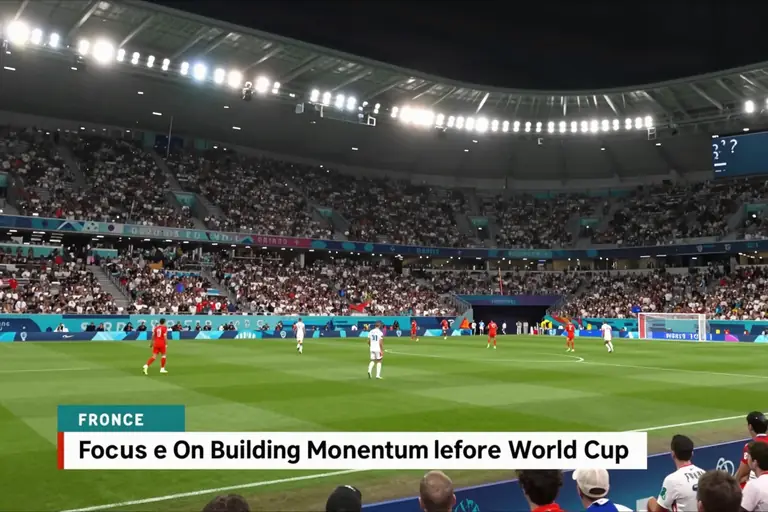
As the next World Cup approaches, all eyes are on the defending champions, France. The squad, brimming with talent, understands the monumental task of retaining their title. Our coverage indicates a clear strategy from the coaching staff: France Focus On Building Momentum Before World Cup. This isn’t just about winning games; it’s about refining tactics, integrating new talent, and ensuring the entire squad is in peak physical and mental condition for the demanding tournament ahead.
The coaching staff, led by Didier Deschamps, has consistently emphasized the importance of a strong collective unit over individual brilliance. While they possess some of the world’s most gifted players, the real strength lies in their cohesion and tactical discipline. The upcoming international breaks and friendly matches are crucial opportunities to test combinations, experiment with formations, and solidify their game plan.
Current Situation: Assessing the Squad’s Readiness
The French national team boasts incredible depth across all positions, a luxury many other nations can only dream of. However, this also presents a challenge: selecting the right balance and ensuring every player understands their role. Recent performances have shown flashes of brilliance, coupled with moments where consistency could be improved. The focus now is on ironing out these inconsistencies.
Injuries have always been a concern for any top-tier team, and France is no exception. Managing player workload and ensuring key individuals are fit and fresh for the World Cup is paramount. We’ve seen Deschamps rotate his squad regularly, giving opportunities to a wider pool of players. This not only keeps everyone sharp but also provides valuable experience, which could prove vital if injuries strike during the main event.
Team Analysis: Strengths and Areas for Refinement
France’s primary strength lies in its attacking prowess. With players like Kylian Mbappé, Antoine Griezmann, and Olivier Giroud, they possess a formidable front line capable of dismantling any defense. Their midfield, anchored by N’Golo Kanté and Paul Pogba (when fit), offers a blend of defensive solidity and creative flair. Defensively, they are generally robust, with experienced campaigners like Raphaël Varane leading the backline.
However, there are always areas for refinement. Integrating younger talents into the squad seamlessly is a continuous process. Finding the perfect balance in midfield, especially against teams that press high, remains a key tactical consideration. Our analysis suggests that maintaining defensive concentration for the full 90 minutes, particularly against counter-attacking teams, will be a point of emphasis in their preparations.
Player Watch: Key Individuals to Monitor
- Kylian Mbappé: His explosive pace and clinical finishing make him a constant threat. His form leading up to the tournament will be critical for France’s chances.
- Aurélien Tchouaméni: The young midfielder has emerged as a vital cog in the team. His ability to break up play and distribute passes effectively will be crucial in controlling games.
- Jules Kounde: A versatile defender who can play both centrally and at right-back. His adaptability provides Deschamps with valuable tactical options.
- Mike Maignan: With Hugo Lloris’s international career potentially winding down, Maignan’s performances in goal will be under scrutiny. His shot-stopping and distribution are top-tier.
These players, among others, represent the core of France’s strategy. Their individual performances and how they integrate into the collective will significantly influence the team’s overall momentum.
Tactical Overview: Deschamps’ Approach
Didier Deschamps is known for his pragmatic and results-oriented approach. He often favors a 4-2-3-1 or a 4-3-3 formation, adapting based on the opponent. His teams are typically well-organized defensively, relying on quick transitions and the individual brilliance of his attackers to score goals. The emphasis is on control, both in possession and defensively.
The training camps leading up to the World Cup will likely involve intensive tactical sessions, focusing on set-piece routines, defensive shape, and attacking patterns. We expect to see a lot of emphasis on quick ball recovery and exploiting spaces in wide areas. The ability to switch between different tactical approaches within a game will also be a key area of focus, allowing France to adapt to various match situations.
The recent performances suggest that Deschamps is also looking to foster a more fluid attacking style, allowing his forwards more freedom while maintaining defensive solidity. This evolution could make France even more unpredictable and dangerous on the world stage.
Historical Context: Defending Champions’ Challenges
History shows that defending a World Cup title is an incredibly difficult feat. Only two nations have successfully done it: Italy in 1938 and Brazil in 1962. This historical context adds another layer of pressure and motivation for the French squad. They are acutely aware of the challenge that lies ahead.
The experience from their 2018 triumph, however, provides a valuable blueprint. The current squad contains many players who were part of that winning campaign, bringing invaluable big-tournament experience. This blend of seasoned veterans and exciting new talent is a significant asset as France Focus On Building Momentum Before World Cup. Their shared history and understanding of what it takes to win at the highest level will be crucial.
FAQ
Q: What is France’s primary goal in the lead-up to the World Cup?
A: Their primary goal is to build strong team cohesion, refine tactical strategies, and ensure all players are in peak physical and mental condition to perform at their best during the tournament.
Q: Which players are considered vital for France’s World Cup campaign?
A: Key players include Kylian Mbappé, Aurélien Tchouaméni, Jules Kounde, and Mike Maignan, whose individual performances and integration into the team will be crucial.
Q: What tactical approach does Didier Deschamps typically favor?
A: Deschamps is known for a pragmatic approach, often using a 4-2-3-1 or 4-3-3 formation, emphasizing defensive organization, quick transitions, and exploiting individual brilliance in attack.
Q: What historical challenge does France face as defending champions?
A: History shows that defending a World Cup title is extremely difficult, with only two nations achieving it. France aims to defy these odds, leveraging their 2018 winning experience.