
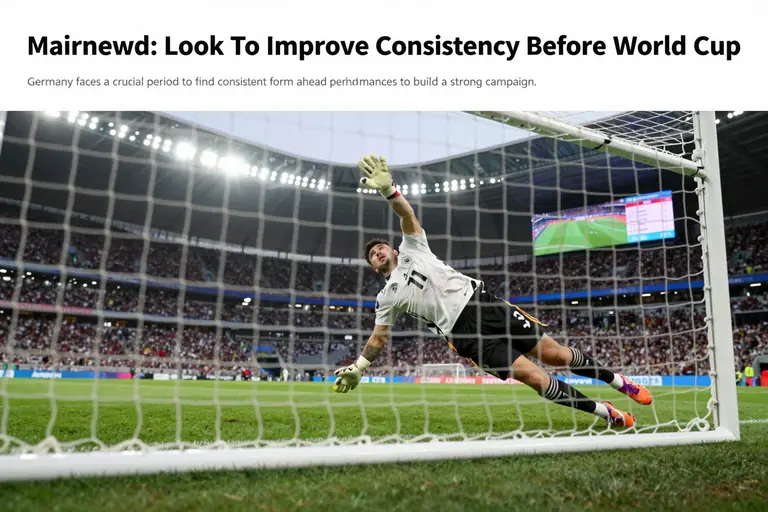
The Road to Consistency for Germany
As the next World Cup approaches, the focus for many national teams shifts from qualification to fine-tuning their squads. For Germany, a footballing powerhouse with a rich history of success, the journey to the upcoming tournament is particularly interesting. Recent performances have shown flashes of brilliance mixed with periods of inconsistency, prompting the coaching staff and fans alike to wonder if they can iron out these issues before the big stage. Indeed, Germany Look To Improve Consistency Before World Cup, a task that will define their potential deep run in the competition.
The German national team, often referred to as Die Mannschaft, has always been held to a high standard. After a disappointing showing in the previous World Cup, the pressure is on to demonstrate that they are once again among the elite contenders. Achieving this means not just winning games, but doing so with a level of control and predictability that has sometimes been absent in recent outings. This drive for stability and reliable performance is now a primary objective.
Team Analysis: Strengths and Weaknesses
Germany boasts a roster filled with world-class talent, particularly in midfield and attack. Players like Joshua Kimmich, Jamal Musiala, and Kai Havertz represent the blend of experience and youthful exuberance within the squad. Their ability to dominate possession, create scoring opportunities, and execute intricate passing sequences remains a significant strength. When these players are in sync, Germany can dismantle any opposition.
However, recent matches have highlighted a few areas needing attention. Defensive lapses, particularly against counter-attacking teams, have been a recurring theme. The team sometimes struggles to maintain intensity for the full 90 minutes, leading to late goals conceded or an inability to close out games. Another challenge lies in converting chances; while they create plenty, clinical finishing has occasionally been an issue. Addressing these vulnerabilities will be crucial if they are to build the consistent performances needed for a successful World Cup campaign.
Recent Results and Form
Looking at Germany’s recent results paints a picture of a team still finding its rhythm. They have secured impressive wins against strong opponents, showcasing their potential. Yet, these victories have often been interspersed with draws or unexpected losses against teams they would typically be expected to overcome comfortably. This fluctuating form is precisely what the coaching staff aims to stabilize. For example, a dominant performance in one match might be followed by a disjointed display where the team struggles to impose its will. This up-and-down nature needs to be replaced by a more dependable output.
The coaching staff has been experimenting with different formations and personnel to find the optimal balance. This period of experimentation is vital for understanding which combinations work best under pressure. The goal is to arrive at the World Cup with a settled starting XI and a clear tactical identity that the players are comfortable executing consistently.
Tactical Overview: Finding the Right Balance
Under the current management, Germany typically favors a possession-based style, aiming to control the tempo of the game and create chances through intricate build-up play. The midfield is often the engine room, dictating play and providing a platform for the forwards. However, the tactical approach needs to be flexible enough to adapt to different opponents and match situations. There’s a clear emphasis on pressing high and winning the ball back quickly, but this also leaves them vulnerable if the press is broken.
One key aspect of improving consistency will be the defensive organization. Ensuring that the backline is well-drilled and that communication is seamless will be paramount. This includes not just the central defenders, but also the full-backs and defensive midfielders, who play a crucial role in shielding the defense. Offensively, while creativity is abundant, there’s a need for more directness and clinical finishing in the final third. Developing a more ruthless edge will turn draws into wins and close matches into comfortable victories.
Player Watch: Who Needs to Step Up?
Several players will be pivotal in Germany’s quest for consistency. Manuel Neuer, despite his age, remains a critical presence in goal, offering leadership and crucial saves. In defense, Antonio Rüdiger’s experience and physicality are indispensable. Midfielders like Kimmich and Ilkay Gündoğan are tasked with controlling the game’s tempo and distributing the ball effectively. Upfront, the likes of Serge Gnabry, Leroy Sané, and Havertz need to consistently deliver goals and assists. The emergence of young talents such as Jamal Musiala adds another dimension, but their integration must be managed carefully to avoid over-reliance.
The performance of these key individuals, combined with strong team cohesion, will directly impact Germany’s ability to perform at a high level consistently. Individual brilliance can win a single match, but consistent team effort and tactical discipline are what win tournaments. The coaching staff will be working closely with these players to ensure they are in peak physical and mental condition for the World Cup.
The Path Ahead: Building Momentum
The remaining international breaks and friendly matches before the World Cup will be vital tests for Germany. These games offer the perfect opportunity to implement tactical adjustments, solidify player combinations, and build confidence. Each match will be treated as a dress rehearsal, allowing the team to experience different scenarios and refine their approach. The goal is to arrive at the tournament not just with a talented squad, but with a well-oiled machine that can perform reliably under pressure.
For Germany, the objective is clear: to eliminate the periods of inconsistency that have plagued them and ensure they are a formidable, predictable force. The talent is there, the coaching staff is dedicated, and the history is rich. If they can harness their potential and find that crucial consistent rhythm, they will undoubtedly be a serious contender in the upcoming World Cup.
FAQ
What does “improve consistency” mean for the German national team?
Improving consistency means performing at a high level more regularly, avoiding drastic ups and downs in performance, and maintaining tactical discipline throughout matches, especially against varying opponents.
Which players are key to Germany’s consistency efforts?
Key players include Manuel Neuer, Antonio Rüdiger, Joshua Kimmich, Ilkay Gündoğan, and forwards like Jamal Musiala, Kai Havertz, and Serge Gnabry, whose individual performances and collective understanding are crucial.
What tactical adjustments might Germany make to achieve better consistency?
Tactical adjustments could involve refining defensive organization, improving clinical finishing, and potentially adopting more flexible formations to adapt better to different match situations and opponents.