
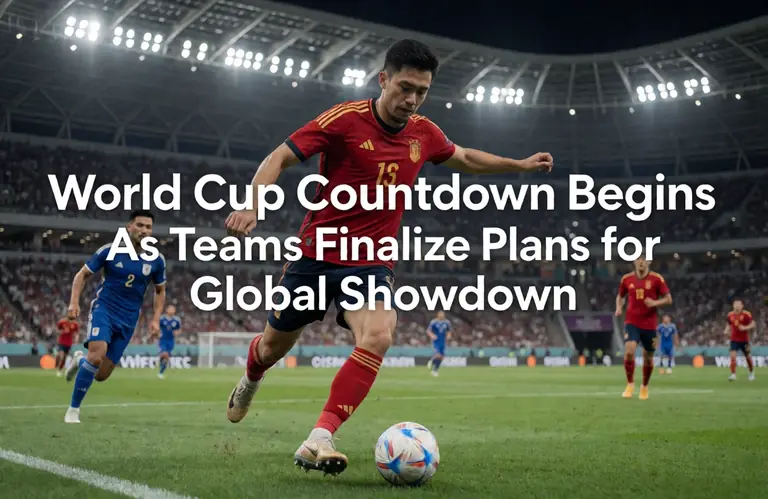
The Global Fever Pitch: World Cup Countdown Begins
The air is thick with anticipation, a palpable hum resonating across continents. From the bustling metropolises of Manila to the serene landscapes of the Cordilleras, and indeed, from every corner of the globe, the world is collectively holding its breath. Why? Because the World Cup Countdown Begins As Teams Finalize Plans, signaling that the biggest, most revered spectacle in international football is just around the corner. This isn’t merely about a game; it’s about the fierce embrace of national pride, the pursuit of lifelong dreams, the unyielding spirit of competition, and the unifying power of the beautiful game.
Every four years, the globe unites under the vibrant banner of football, transcending linguistic, cultural, and political divides. This edition promises to be no different, perhaps even more captivating given the evolving landscape of international football. The arduous journey to this pinnacle has been fraught with peril and triumph for many nations, filled with thrilling qualifiers that saw last-minute heroics, heart-breaking losses that fueled future resolve, and moments of sheer, unadulterated brilliance. Now, with the main tournament almost upon us, the intense focus shifts entirely to the final, meticulous preparations. With each passing moment, every decision, every gruelling training session, and every subtle tactical tweak holds immense, game-changing weight.
Behind the Scenes: What Happens When the Countdown Begins?
For the casual fan, the final stages of World Cup preparation might seem like a straightforward affair of gathering players and heading to the host nation. However, the reality is far more intricate and demanding. You might wonder what truly goes into these critical final weeks and days. It’s far more than just picking a starting eleven; it’s a symphony of strategic planning, scientific precision, and psychological fortitude. Coaches, their extensive support staff, and even national federations enter an intensely focused period of strategizing, fine-tuning, and profound psychological preparation. This involves several critical and interconnected areas:
- Squad Selection: The Agonizing Choices: This is arguably the most emotionally charged and strategically vital part of the entire process. Coaches must meticulously whittle down their provisional squads, often comprising 30-40 players, to the final, coveted roster of typically 23 or 26 individuals. This often means leaving out exceptionally talented players, a decision that can ignite national debate. The delicate balance between seasoned experience and youthful exuberance, offensive prowess and defensive solidity, physical resilience and creative flair, becomes paramount. Every player’s current form, injury history, tactical fit, and even their personality within the team dynamic are scrutinised.
- Tactical Adjustments and Opponent Analysis: Once the squad is set, opponent analysis goes into overdrive. Teams meticulously study their group stage adversaries and potential knockout round opponents, using vast amounts of data and video footage. This involves identifying weaknesses to exploit, strengths to neutralize, and individual player tendencies. Formations are practiced repeatedly, set-piece routines (both offensive and defensive) are perfected down to the millisecond, and contingency plans are drawn up for various match scenarios, including trailing, leading, or playing with a man advantage/disadvantage.
- Peak Physical Conditioning and Injury Prevention: Players are pushed to their absolute peak physical condition without risking injury, a challenging tightrope walk. This involves highly specialized training regimens tailored to individual needs, rigorous nutrition plans overseen by sports dieticians, and advanced recovery protocols including cryotherapy, massage, and hydrotherapy. A squad that is physically robust and free of niggling injuries is a formidable squad, capable of enduring the intense demands of a multi-game tournament.
- Psychological Preparation and Team Cohesion: The pressure of a World Cup is immense, arguably unparalleled in sports. Sports psychologists work extensively with players to manage anxiety, build unwavering confidence, and foster a strong, cohesive team spirit. Techniques like visualization, mindfulness, and group dynamics exercises are employed. Mental resilience, the ability to perform under extreme pressure, and a united team front can often be the fundamental difference between victory and defeat, especially in tight knockout matches.
- Logistics and Travel: The Unseen Machinery: Behind the scenes, massive, intricate logistical operations are underway. Travel arrangements, secure and comfortable accommodation, state-of-the-art training facilities, and comprehensive security details are all meticulously planned months, even years, in advance. The goal is to ensure players can focus solely on football, free from any external distractions or inconveniences, allowing them to perform at their absolute best.
- Media Management and Public Relations: With global attention comes intense media scrutiny. Teams develop strategies to manage press conferences, control narratives, and protect players from overwhelming media pressure. This involves media training for players and designated spokespersons to ensure clear and consistent communication.
It’s a comprehensive, multi-faceted effort, a meticulously orchestrated symphony of dedicated individuals working tirelessly towards a common, monumental goal. The intensity, the stakes, and the global anticipation only grow.
The Favorites and Dark Horses: Who to Watch
Every World Cup tournament arrives with its established favorites, and this edition is no exception. Traditional footballing powerhouses like Brazil, with their samba flair and storied history; Argentina, led by their enigmatic captain; defending champions France, boasting incredible depth; and perennial contenders Germany, known for their efficiency, often find themselves at the very top of the betting odds and pundit predictions. Their rich history of success, unparalleled depth of talent, and extensive experience on the grandest stage make them perennial contenders, expected to go deep into the competition. These nations are often under the most intense scrutiny, with every squad announcement, every friendly result, and every training ground rumour analyzed by fans and pundits alike.
However, the enduring beauty and irresistible allure of the World Cup lie precisely in its unpredictability. There are always the so-called ‘dark horses’ – teams capable of upsetting the established order and making surprisingly deep, memorable runs in the competition. Nations like Belgium, with their ‘golden generation’ still seeking ultimate glory; Portugal, often driven by individual brilliance; England, carrying the weight of expectation; and Spain, with their possession-based philosophy, consistently boast strong squads and could easily surprise. Moreover, the growing footballing prowess in regions like Africa and Asia means that teams from these confederations might spring a few significant surprises, challenging traditional hierarchies. The excitement builds exponentially, and we eagerly await to see which teams will rise magnificently to the occasion, defying expectations and etching their names into football folklore.
Key Players to Keep an Eye On: The Individuals Who Define the Tournament
While football is a team sport, individual brilliance often lights up a World Cup, creating iconic moments that are replayed for decades. The spotlight naturally falls on the superstars, the transcendent talents who possess the ability to change the course of a match with a single, magical touch. We’re talking about prolific goalscorers who can find the net from any angle, masterful playmakers who dictate the tempo and unlock defences, and impenetrable defenders or goalkeepers who stand as last lines of defiance. These individuals carry the hopes and dreams of their entire nations on their shoulders. Their form leading up to the tournament is intensely scrutinized, as an injury to a key player can significantly alter a team’s prospects and devastate national expectations.
The narratives around these players are already forming, adding another layer of intrigue. Will a revered veteran, perhaps in their final World Cup, finally lift the coveted trophy, solidifying their legend? Will a new, prodigious young talent announce themselves on the global stage, captivating audiences and signaling a changing of the guard? These personal sagas intertwine seamlessly with the larger team narratives, adding another profound layer of emotional depth and excitement as the World Cup Countdown Begins As Teams Finalize Plans.
The Impact Beyond the Pitch: More Than Just a Game
The World Cup is unequivocally more than just a series of football matches; it is a profound cultural phenomenon, a powerful global unifier, and a significant economic driver. The host nation gears up not only for the sporting spectacle but also for an unprecedented influx of international tourists, bringing with it a substantial boost to local economies, a surge in the hospitality sectors, and often accelerated improvements in infrastructure. The global media descends en masse, broadcasting vibrant images and compelling stories from the host country to every corner of the planet, offering a unique opportunity for cultural exchange and international showcasing.
For participating nations, the tournament fosters an almost unparalleled sense of national identity and camaraderie. Flags fly higher, national anthems are sung louder with passionate fervor, and people from all walks of life find common ground, united in their unwavering support for their team. This collective, shared experience is precisely what makes the World Cup so special, so enduring, and so universally beloved. The entire world prepares for this shared emotional journey, a roller coaster of hope, despair, elation, and heartbreak.
Even for those who aren’t avid, day-to-day football fans, the World Cup often permeates daily life, becoming a pervasive talking point. Office pools, friendly rivalries among colleagues and neighbours, and animated discussions about memorable goals or controversial decisions become commonplace. It’s a powerful testament to the sport’s universal appeal and its ability to capture the imagination of even the most casual observer. The very fact that the World Cup Countdown Begins As Teams Finalize Plans means that these conversations are already starting, building a colossal wave of momentum towards the eagerly anticipated opening whistle.
The Final Push: What Teams Are Doing in These Last Weeks
As the World Cup Countdown Begins As Teams Finalize Plans, the final weeks leading up to the tournament are a delicate, high-stakes balance of intense physical and tactical training, coupled with an absolute imperative for injury prevention. Most teams will participate in a few carefully selected friendly matches. These aren’t necessarily about winning at all costs, but rather serve as crucial opportunities to test out new formations, give fringe players valuable game time, build essential team chemistry, and assess tactical readiness against real opposition. These friendlies are indispensable for getting players match-fit, for coaches to make any last-minute assessments, and to fine-tune strategies.
Team camps are often established in serene, private locations, far away from the intense media glare and the distractions of urban life. This allows players to bond more deeply, focus without external pressures, and immerse themselves fully in the demanding task ahead. Press conferences become more frequent, with coaches and captains sharing their hopes, expectations, and tactical insights, often trying to manage public pressure while simultaneously building morale and confidence within the squad. This is a period of immense pressure, but also one of profound excitement and singular focus for everyone involved.
From the meticulous, granular analysis of opposing teams’ strengths and weaknesses to the precise fine-tuning of set-piece routines, every single detail is scrutinized, debated, and perfected. Dieticians ensure players are fueled optimally for peak performance and recovery; physiotherapists and medical teams work tirelessly around the clock to keep everyone in top physical shape and manage any minor aches or pains; and performance analysts pore over vast amounts of data to gain even the slightest, most marginal edge over competitors. It’s a testament to the unparalleled professionalism, scientific rigor, and unwavering dedication required at this elite level of international football. Indeed, every single facet of preparation, from the grand strategic vision to the smallest logistical detail, is being handled with the utmost care and precision.
Anticipation Builds: The Spectacle Awaits
The global anticipation is not just palpable; it’s practically vibrating. Football fans worldwide are marking their calendars with fervent dedication, planning their viewing schedules with military precision, and donning their national colours with immense pride. Whether it’s gathering in crowded pubs, hosting lively watch parties at home with friends and family, or travelling thousands of miles to be there in person, soaking in the electric atmosphere, the passion for the World Cup is unparalleled and truly infectious. The stage is being immaculately set for a month of unforgettable drama, breathtaking skill, heroic performances, and moments that will be indelibly etched into the annals of sporting history.
From the grandeur of the opening ceremony to the exhilarating final whistle of the championship match, every single moment promises excitement, tension, and unbridled emotion. Goals will be scored that defy belief, new heroes will emerge from unexpected corners, and hearts will inevitably be broken in the cruelest of fashions. But through it all, the indomitable spirit of football will reign supreme, uniting billions in a shared experience. Soon, the talking will stop, the predictions will cease, and the beautiful game will finally take centre stage. Get ready, for an experience unlike any other!
The world is ready. The teams are almost ready, honed to perfection. The magnificent stage is almost set, gleaming under the global spotlight. The World Cup Countdown Begins As Teams Finalize Plans, and soon, history will not just be observed, but actively made, witnessed by billions.
FAQ: Your World Cup Queries Answered
Q1: When does the World Cup officially start?
The exact start date varies for each tournament cycle, as FIFA announces the schedule well in advance. Typically, once the World Cup Countdown Begins As Teams Finalize Plans, the grand opening ceremony and the highly anticipated first match are just a few weeks away. Fans are strongly advised to check the official FIFA website or reputable sports news outlets for the precise dates, kick-off times, and broadcast schedules relevant to their local time zones.
Q2: How many teams participate in the men’s FIFA World Cup? Is this number changing?
Currently, 32 national teams participate in the men’s FIFA World Cup finals tournament, a format that has been in place since 1998. However, FIFA has confirmed plans to expand the tournament to include 48 teams starting from the 2026 edition, which will be co-hosted by the United States, Canada, and Mexico. This significant expansion will mean even more nations will have the incredible opportunity to be involved, offering greater global representation.
Q3: What are some of the most common and significant challenges teams face during final preparations?
Teams face a multitude of complex challenges during the final preparation phase. These include: Managing Player Injuries: Ensuring key players are fit while avoiding new injuries is a constant tightrope walk. Intense Media Scrutiny and Public Pressure: The global spotlight can be overwhelming, and managing expectations is crucial. Adapting to Different Climates or Time Zones: The host nation’s environment might require significant acclimatization, especially for teams travelling long distances. Ensuring Team Cohesion and Morale: Maintaining a positive, united team spirit over a challenging month-long tournament is vital. Tactical Flexibility: Being able to adapt strategies based on opponents and game situations. Logistical Hurdles: Coordinating travel, accommodation, and training facilities seamlessly. All these factors are crucial considerations and demand meticulous planning and execution as the World Cup Countdown Begins As Teams Finalize Plans, often determining a team’s ultimate success or failure.
Q4: How important are friendly matches in the final weeks before the World Cup?
Friendly matches played in the final weeks are incredibly important, though their objectives differ from competitive games. They serve as crucial opportunities for coaches to: Test Tactical Formations: Experiment with different systems and player combinations. Build Match Fitness: Get players up to optimal speed and endurance. Assess Player Form: Evaluate who is in the best condition and sharpest form. Build Team Chemistry: Allow players to gel and understand each other’s movements. Practice Set Pieces: Refine offensive and defensive dead-ball situations. While results are not the primary focus, a good performance can boost confidence, while a poor one can highlight areas needing urgent improvement before the official tournament begins.
Q5: What role do sports psychologists play during the World Cup preparations?
Sports psychologists play an increasingly vital role in modern football, especially during high-stakes events like the World Cup. Their contributions include: Anxiety Management: Helping players cope with the immense pressure and expectations. Confidence Building: Implementing strategies to enhance individual and collective self-belief. Team Cohesion: Facilitating group dynamics to foster a strong, unified team spirit. Focus and Concentration: Training players to maintain peak concentration throughout matches. Resilience: Preparing players to bounce back from setbacks and maintain mental toughness. Their work is integral to ensuring players are not only physically but also mentally prepared for the rigors and emotional roller coaster of the World Cup.